Wednesday, September 05, 2007

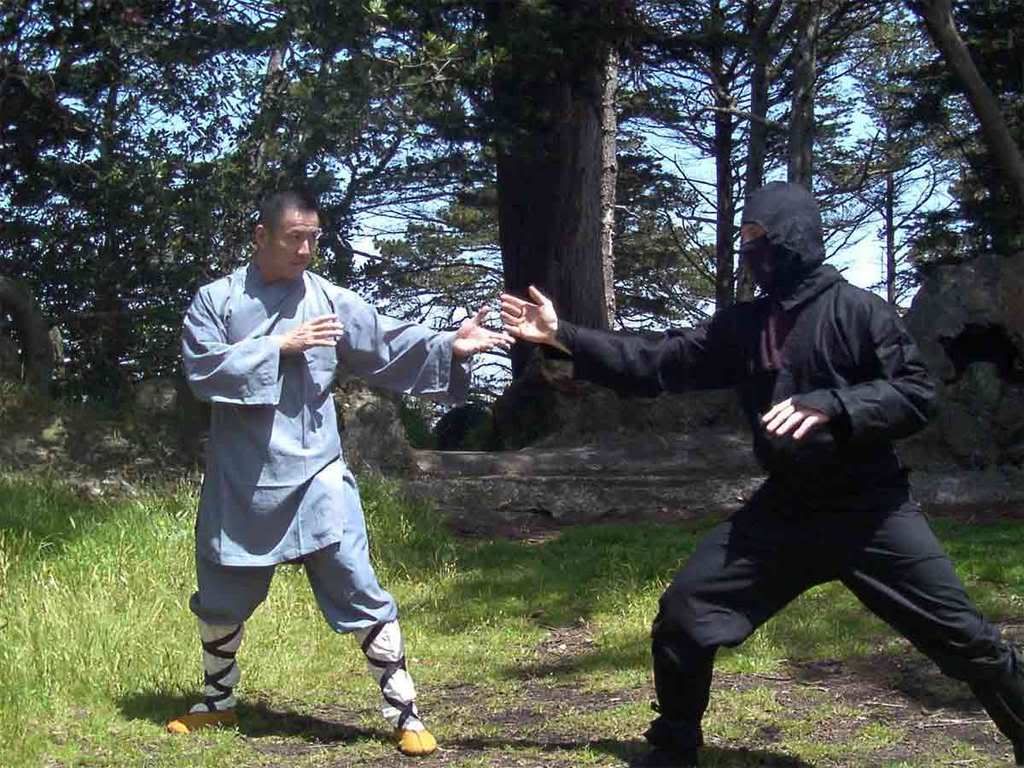
Shaolin Monks vs. Ninjas! In Court!

From Reuters Africa:
Shaolin Monks Vs. Ninjas. In the Courtroom!

Hilarious.
I can only imagine how the conversations are going for this one over there. :)

I'm sure there's a Law & Order epsiode in this somehow.


Someone should make a facebook widget for THIS. Screw Jedi Vampires vs. Sith Werewolves and Federation Zombies. :)

Tuesday, September 04, 2007

9/07 Poetry Features Indian poets

The new September 2007 issue of Poetry Magazine has almost justified my subscription after two years, with a selection of 13 Indian poets gathered by R. Parthasarathy, author of the 1977 long poem, Rough Passage and his translation of The Tale of an Anklet, a Tamil epic.

He is a professor of English and Asian Studies at Skidmore College in New York.

In the portfolio Dr. Parthasrathy has selected, he's chosen poems from "thirteen of the twenty-four languages, including English, recognized by India's National Academy of Letters (Sahitya Akademi)."

There are a lot of provocative statements within his explanatory essay, including an assertion that there haven't been any poets comparable to the European Moderns since the Indian poet Ghalib.

Dr. Parthasarathy says that English poetry, described by one poet as the "milk of the tigress" has 'served as a model to be imitated, often with unhappy results'.

He does cite the emergence of Dalit poetry (poetry of the oppressed and downtrodden) and feminist poetry as significant developments in Indian poetry.

He also has an intriguing line regarding the Buddhist monk and translator Kumarajiva who remarked that in the act of translating 'a Sanskrit text into Chinese it loses all its nuances...It's something like chewing cooked rice and then feeding it to another person. Not only has it lost its flavor; it will also make him want to throw up."

A charming image, but how far off the mark is Kumarajiva?

I'm only now just starting to read through Dr. Parthasarathy's selections, left wondering how many other really good Indian poets are also out there who had to be excluded or who are slipping under the radar.

I'll probably comment more on this issue later.

It makes me wonder who would go into a portfolio of Laotian American or Hmong American poets right now, and what a commentator/curator would say. And how would we put together a portfolio of TRA poetry? The hamster wheel turns...

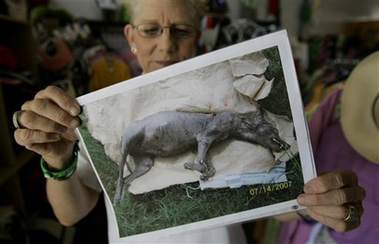
Xolo, Not A Chupacabra.

About as fast as it began, it looks like the end to the recent story suggesting the discovery of three Chupacabra corpses in Texas.

Experts now contend they are in fact the bodies of three Xoloitzcuintle or Xolos for short, a rare dog.

Many are now dismayed that it looks like someone is killing and abandoning undesirable Xolos in their efforts to breed ideal versions of the hairless dogs.

And in the meantime, the search for the real chupacabra continues.

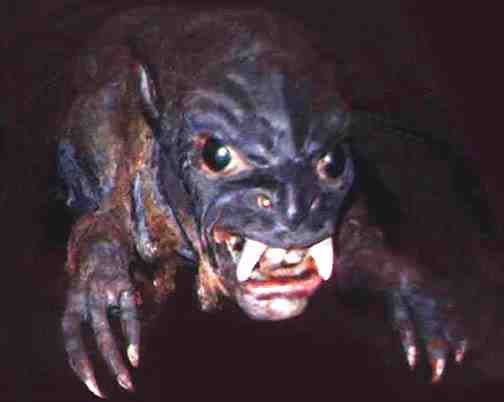
I suck goats!

As a quick recap: The Chupacabra is a cryptid inhabiting parts of the Americas.

First reported in Puerto Rico in 1990, it has since been sighted in Mexico and the United States, especially in Latin American quarters. The name translates literally from Spanish as "goat sucker" because the creature attacks and drinks the blood of livestock, especially goats.

So if you spot one, let us know!

Giant Lizard Theater

This post isn't exhaustive by any means or absolutely authoritative.

It's just some thoughts I've gathered from here and there on the traditional mythological reptiles of Asia worth noting, comparing and contrasting them.

Let's start with the basic ones:

The ever-familiar Tatsu or Ryu of Japan.

Recognizable by its three toes, like most of the creatures we'll be mentioning, they are wingless and snake-like creatures with small clawed legs and a horned or antlered head.

These beings are associated with large bodies of water, the clouds in the skies or the heavens in general. The Ryu are often far more slender and fly less frequently than those in the traditions of Vietnam, Korea, or China.
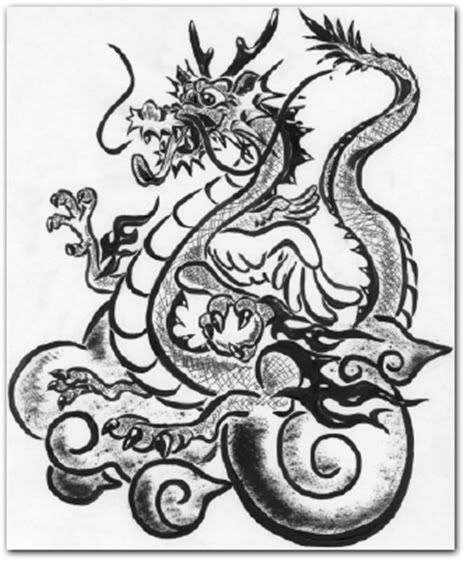
The Yong of Korea can be recognized typically by its four toes.

It is connected to water and agriculture as bringers of rain and clouds. Many are said to reside in rivers, lakes, oceans or deep ponds inside mountains.

Politically, the Yong represents the Emperor. The Yong are usually depicted as benevolent. They possess a very specific number of scales: 81.

According to some sources, there's some numerology involved making the numbers 9 x 9 lucky and significant.
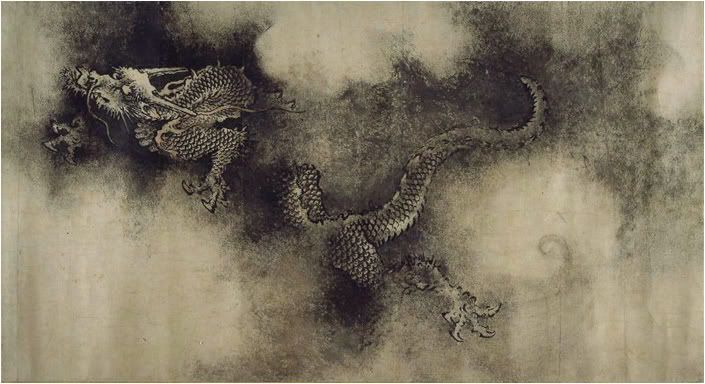
In China, the equivalent creature is the Lung, and there are several complex stories and heirarchies related to the Lung.

Featuring 4 or 5 toes and 118 scales, the Lung have several different variations including (but not limited to):

Tianlong (天龍) or Celestial Dragon.

Shenlong (神龍) or Spiritual Dragon, controller of the weather.

Fucanglong (伏藏龍) The Dragon of Hidden Treasures, guarding precious metals and jewels buried in the earth.

Dilong (地龍) Controlling rivers, Dilong is also considered the Earth Dragon. Dilong spends springtime in heaven and autumn in the sea.

Jiaolong (虯龍), the mighty Horned Dragon.

Panlong (蟠龍) is the term for the Coiling Dragon who dwells in the lakes of Asia.

My personal favorite is the Huanglong (黃龍)or Yellow Dragon - a hornless dragon regarded for its scholarly knowledge.

And then there are the four Dragon Kings (龍王) - each rules over one of the four seas.
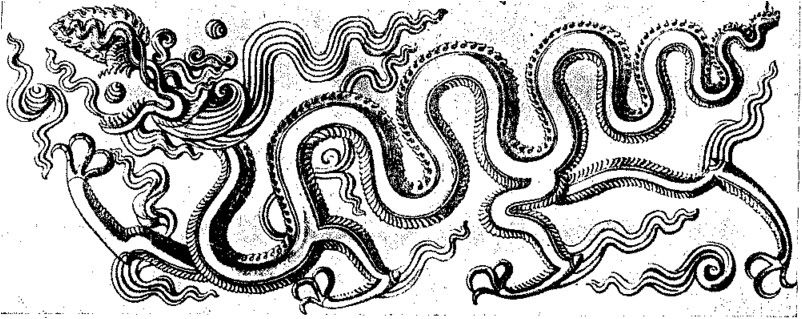
And in Vietnam, we find the Rồng or Long, who also feature four or five toes, but also occasionally breathe fire. Quite a difference, actually.

Within Vietnamese tradition, there is a belief that they are the descendants of a Rồng who married a fairy.

This is interesting to me as we compare it to the stories the Lao tell about being descended from a giant Nak that lives in the Mekong River.

Or the myths of the Naga people who believed for centuries they were descended from snake-like dieties of old. And we shouldn't forget the various Hmong legends of the Zaj.

This is all quite a contrast from Judeo-Christian connections of the serpent to the expulsion from Paradise.

Just some interesting things to ponder for the night.