Showing posts with label Asian American. Show all posts

Wednesday, December 07, 2016

2016 Asian American Poetry Books and Chapbooks


Following a month of research and asking over 388 Asian American poets, scholars, publishers, and community builders familiar with the academic, small press, mainstream, and underground Asian American literary scene, over 30 books and chapbooks of Asian American poetry have been identified for publication in 2016. I've posted a public album of the covers of these books on Facebook and Flickr with author information and book information as available.  

I would also note that this year has an impressive showing among the Vietnamese and Filipina poets, and it's a delight to see the Hmong and Khmer communities have works put forward this year as well. A special thanks to Victoria Chang, Alyss Dixon, Mari L'Esperance, Grace Loh Prasad, Sun Yung Shin, and Marianne Villanueva for their assistance in putting this list together with me. I‘m particularly happy to see that this year has been a good year for many poets to debut their very first book or chapbook, because it’s so important for us to get more of our poetic voices out into the world, now more than ever. 

Leviathan by Neil Aitken. Hyacinth Girl Press.

Standing Water Dreams by Eleanor Chai. Farrar, Straus and Giroux.

one of us is wave one of us is shore by Genève Chao. Otis College of Art and Design. and Hillary is Dreaming. Make Now Books.

A Love Song, A Death Rattle, A Battle Cry by Kyle "Guante" Tran Myrhe. Button Poetry.

Unbearable Splendor by Sun Yung Shin. Coffee House Press.

Year Zero by Monica Sok. Poetry Society of America.

Night Sky With Exit Wounds by Ocean Vuong. Copper Canyon Press.

OVERPOUR by Jane Wong. Action Books.

Poor Anima by Khaty Xiong. Apogee Press. Additionally, Ode to the Far Shore, Platypus Press.

I, Too Dislike It, by Mia You. 1913 Press


Saturday, October 24, 2015

San Diego Lao Boat Racing Festival coming Oct. 31


On Saturday, October 31st in San Diego, I'll be joining Sahtu Press at the Lao Boat Racing Festival at Tecolote Shores North, Mission Bay Park from 9AM to 4PM.


This is the second year the community in San Diego has organized the event. In addition to Dragonboat racing, they'll have Lao food and craft vendors, cultural performances including traditional Lao dance and music, and a parade. There are approximately 7,000 Lao estimated to reside in San Diego. For more information you can visit the organizers' facebook page at: MekongBoatRacing Club.


The other Sahtu Press authors will be there, too, including Nor Sanavongsay, author of "A Sticky Mess" and Krysada Panusith Phounsiri, the author of "Dance Among Elephants". Nor Sanavongsay have had a busy month with recent appearances at ZAPPCON in Fresno and ConVolution in San Francisco. Krysada Panusith Phounsiri also had a successful gallery show for his Snap Pilots photography team in San Diego in addition to his extensive traveling across the country. His book just finished selling out its most recent printing, but a fresh printing is arriving just in time for the Lao Boat Racing Festival.


We'll have copies of Soul Vang's first book of poetry To Live Here, Sunny Chanthanouvong & David Zander's folktale collection The Wolf and the Moon, and Kev Minh Allen's debut poetry collection My Proud Sacrifice.


I'll have copies of Tanon Sai Jai and Demonstra on sale for $20 each at the festival, although we'll also have discounted bundles available throughout the day.

In the Sahtu Press reissue of my 2009 poetry collection, I address the complicated twists and turns of the Lao diaspora in one of my more intimate and personal collections to date. Composed of 56 poems and a photo essay, I contemplate what it means to be Lao and Lao American.

Is there a difference? How do we reconcile with memory, and how do we share a future? Tanon Sai Jai probes many of the familiar symbols and everyday objects of Lao life and pays tribute to many of the artists, writers and community builders I met along the way. Sometimes deep, soften humorous and humane, Tanon Sai Jai gives readers many things to think about on the Path of the Heart.


DEMONSTRA is my 2013 award-winning book. It received the Science Fiction Poetry Association Elgin Award for Book of the Year. As my publisher, Innsmouth Press described it: "In the depths, half-hidden under still waters, await strange and vicious creatures …. Cthulhu, Godzilla and nagas mingle in DEMONSTRA, a speculative poem collection which assembles 20 years of work. DEMONSTRA is a book of things glimpsed out of the corner of the eye. It is about a reality that can never fully be demonstrated, authenticated, dissected, for certain visions always remain in shadows."


As an interesting bit of history, dragonboat racing originated in China, but many other nations observe it to recognize aspects of our shared heritage.

One version of the tale maintains that there was a wise and loyal minister and poet named Qu Yuan who served the Zhou Emperor. His book, the Chu Ci is widely regarded as one of the two greatest books of ancient Chinese verse. He was much beloved by the common people for his constant fight against corruption in the emperor's court. However, Qu Yuan finally became so despondent at the corruption of his colleagues he threw himself into the Milou River.


The community rushed out in long boats hoping to rescue him, but they were too late. They beat drums to scare the fish away, and threw dumplings into the water to feed the fish so they would not eat Qu Yuan's body. It is said that late one night, Qu Yuan's ghost appeared before his friends and told them his fate, asking them to wrap their rice into three-cornered silk packages to ward off a dragon in the river.


Dragonboat races have since been held to commemorate Qu Yuan’s death, typically celebrated on the fifth day of the fifth month of the lunar calendar. Many communities now convene dragonboat races year-round.

My poem "Zongzi" was written in part because of this legend, although it never really found a home in other journals. So it goes.

Zongzi

How can a person be free
If they do not grow?
Will all of the poets die
If Tomorrow finally arrives?

How hard did the home winds blow
On the bleak isle of sharp-beaked Harpies?
Will Qu Yuan ever bob to the surface
And touch my humble dragon's bow?

Can burnt flags really feed trees
better than spilled blood?
If I don't pretend I'm here
Atop my staircase now,
Where do I go tomorrow?

After a good meal on University Avenue,
You might dream of unwrapping
A forlorn writer's last words
Secretly scratched onto a bamboo leaf,
Thrown to the wind for passing schoolchildren
From an attic of dried flowers and dust
And ask, "When do electric elephants dream,
If all of their time is spent remembering?"

Tuesday, October 20, 2015

[Poem] What kills a man

Always small things:
A round.
Holes.

Fumes.
Edges.
Split atoms.
A second.
A footstep.
A sip.  A bite.  A word.  A cell.

A motion. An emotion. A dream.
A fool.

A bit of salt. A drop. A fragment.
The true root of arguments.

What kills a man is mysterious
Only in how minute the culprit
Behind the blow.

We’re careless, and forget:
Even when what kills a man
Is another man,

It is a small thing that kills a man,
The whole earth a single grain

            On a sprawling table filled with the smallest things.

from On the Other Side of the Eye, 2007

Saturday, February 01, 2014

[Theater] The Brothers Paranormal reading at La Jolla Playhouse, Feb. 24th


A reading of THE BROTHERS PARANORMAL a play by Prince Gomolvilas is coming to La Jolla, California on Monday, February 24th.

Directed by Jeff Liu, the tale revolves around two Thai-American brothers who "launch a ghost-hunting business in order to capitalize on the nationwide increase in sightings of Asian-looking ghosts. When the siblings end up investigating the home of a couple that claims to be haunted by one very terrifying spirit, everyone’s notions of reality, fantasy, and sanity clash against the shocking truth."  

It's free admission and starts at 7:30PM. Reservations are required. Space is limited with only 70 seats at La Jolla Playhouse 2910, La Jolla Village Drive La Jolla, California 92037.

http://www.lajollaplayhouse.org/the-season/2013-2014-season/dna-2014

Thursday, January 30, 2014

Kundiman Fellowship deadline approaches!

Asian American emerging poets, apply to be a Kundiman fellow!

The online application deadline is Sat., Feb. 1, 11:59pm EST.

You'll need: $15 and 5-7 pages of poetry, with your name included on each page. Include a cover letter with your name, address, phone number, e-mail address and a brief paragraph describing what you would like to accomplish at the Kundiman Asian American Poetry Retreat. If you're accepted, the non-refundable tuition fee is $375. But, Room and Board are free to accepted Fellows. The Kundiman Asian American Poetry Retreat is held on Fordham University's Rose Hill Campus located in the Bronx, NYC.


Note: Very few writers from Laos have ever gone through this acclaimed program since it began in 2004. Consider applying. Since 2004, twenty-six fellows have published first books and twenty-five have published chapbooks and they credit Kundiman as being instrumental in their growth as writers.


Thursday, December 05, 2013

Lao and a culture of film

I've mentioned the UNESCO Creative Cities Network concept in the past. One of the key art forms they're interested in is cinema. For as much as I talk about throwing our cap over the wall to reach for space, I also feel strongly that we could benefit from exploring our ability to develop a robust infrastructure or many of our arts. While the Creative Cities Network model is intended at the city level, for Lao in diaspora, where we are concentrated in numbers large enough to form whole cities and neighborhoods, I wounder what we can do to reach many of these standards, not so much to make our host country's cities eligible for Creative City status, but for ourselves, because many of these goals are quite laudable.

The following list of criteria are elements of a City of Film. Might we bring those into the different Laotown zones across the US, or abroad:

* Important infrastructure related to cinema, e.g. film studios, film landscapes/environments, etc.;
* Continuous or proven links to the production, distribution and commercialization of films;
* Experience in hosting film festivals, screenings and other film-related events;
* Collaborative initiatives at a local, regional and international level;
* Film heritage in the form of archives, museums, private collections and/or film institutes;
* Filmmaking schools and training centres;
* Effort in disseminating films produced and/or directed locally or nationally;
* Initiatives to encourage knowledge-sharing on foreign films.

Ultimately, in places like Vientiane and Luang Prabang, there are several visionaries who are taking steps to create just that. Can we in the US do any less?

Tuesday, February 28, 2012

New poem in Lantern Review #4

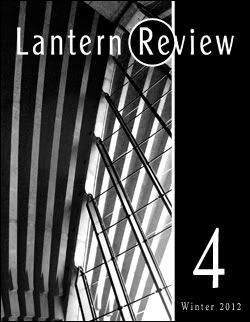
The new issue of Lantern Review is up at http://www.lanternreview.com/issue4 featuring my new poem, "Pen/Sword: 3 tales or so". It also features the work of Timothy Yu, Monica Mody, Neil Aitken, Jenny Lu and Kathy Tran, and more. They've put a lot of hard work into this issue, but it's a great selection for it. Check it out! :)

Monday, February 27, 2012

Southeast Asian speculative art anthologies


With the recent release of Alternative Alamat from the Filipino community a few months ago, and with my own work with Saymoukda Vongsay to develop the Lao American Speculative Arts Anthology (catchy name still to be determined...) I've wondered a lot about the challenges in putting together an anthology.


I was heartened by a hope from one potential contributor that he'd be able to submit a piece in to the next one. Although I pointed out that we haven't had a general anthology in 11 years, the very slim SatJaDham collection, and this is the first full-length anthology in 40 years since the end of the war. I, too, was hopeful that the anthology might become a regular thing, but given the 4 decades its taken so far, regular may be a relative notion.

I often think: When other writers get involved in the mix, do we owe it to them to ease the way for them into more mainstream professionalism, or do we develop a submission, editing and engagement process that's appropriate to our community's way of doing things. (Or our counter-culture way of doing things, if we feel like being radical on the point.) I find myself at a number of points wondering, how would Alternative Alamat have done it? And are there other interesting approaches we could take?

We're at a point with the Lao American Speculative Arts Anthology where we are asking ourselves: Do we print only the best, in our opinion, or a survey of the types of styles and ideas out there? Do we encourage collaborations? Do we put out specific requests for specific types of stories? Do we include pieces that are only obliquely connected to speculative art just to show how in some cases, writers AREN'T taking on these issues.


Barbara Jane Reyes' remarks on anthologies always stick in my head regarding their politics and what they do and don't do for writers. Still, like a Whitman's Sampler of chocolates, for some readers it can be a good way to carry many of their favorite writers around in one convenient volume. There is the challenge of how do you then convince them to go beyond what's in the anthology and see the full body of a writer's work.

That was one of the issues I was considering as I looked to the Kurodahan Press anthologies for some ideas of how Asian speculative arts anthologies can be done well. Especially the ones responding to H.P. Lovecraft in Japan. It was an enjoyable series but not enough was presented to provide me a context to consider: is this a very influential story or an underrated one? Is this a regular example of the author's writing, or a mysterious one-off. What was its publication history? And is this version different from others?

This last question I consider frequently because I know that several short stories and poems of mine that I've had published will definitely undergo revisions for different formats and mediums. I don't think it will go quite as extreme as the revisions to Leaves of Grass or The Magus, but I think these are some of the interesting questions to consider when you're looking at a piece. As I look at Alternative Alamat, I can definitely appreciate some of the questions they, too, were trying to address. 

Saymoukda Vongsay and I are also wondering if we should simply excerpt some pieces, or allow in more creative non-fiction works. A story should be more than just a regular story set in the world followed by "and a robot wheeled by." The fantastic elements should definitely have a purpose within the narrative, one that changes the way characters respond and interact. The way they think.

Do we include alternate history pieces that take a controversial stance or opt for those which work a more nuanced sense of international relations? When we watch a film like Uncle Boonmee and see characters referring to Lao as 'smelly' and 'lazy' we're going to take umbrage. But that doesn't mean the proper turn is to print stories that sling those invectives back at people.

Do we keep it family friendly? It seems the polite thing to do, but then again, on any given afternoon our readers children will be going off to lay waste to the Ork and zombie hordes, or doing any number of misanthropic things while committing grand theft. So, why bother shying away from that? As always, the mantra I hear from other editors is: "Is it in the service of the story?" We don't have to present gratuitous sex and violence, but the original Grimm's Fairy Tales were also some pretty dark works too.

What are some of the other issues you like to consider when putting together an anthology? What do you expect to see, what do you reject, what do you wish you saw more of?

Thursday, February 23, 2012

On the Long Poem, the Profound and Lao American speculative poetry

"The long poem is an attempt at a major poem. Though most modern poets have worked in the short forms, many have also been tempted by the longer distance. Eliot emphasized "concentration." Pound derided yet practiced Imagism. Yet both Eliot and Pound were called toward the epic. William Carlos Williams, in his aims for Paterson, claimed that "the longer I lived in my place, among the details of my life, I realized that these isolated observations and experiences needed pulling together to gain profundity."

- From "A Lost Classic: David Shapiro's Lateness,"  
Frederick Smock, American Poetry Review, Jan./Feb. 2012 


There are many approaches to poetry, but within speculative poetry, I think it is important that we continue to keep abreast of many of the questions more conventional poetry is examining. What constitutes a major poem of deep, transformative meaning for its readers when we are exploring the worlds of the fantastic, the alien and the far-flung future? 

Who has it within them to write a modern work of 24,000 verses on par with the Ramayana or Phra Lak Phra Lam? In the classic days of the Lao epics, it could take almost a week to recite the full epic every evening, much akin to the work of Wagner's Ring of the Nibelung.

Today, we barely get 15 minutes on stage. 

I might argue that this sort of time frame can be a relief when you're dealing with tedious poets. But at the same time, we also see so many pieces designed as if we're in a rush to say something profound. This isn't always how profound works. Sometimes it takes certain kinds of literary spacing for it to unfold properly in its scale and magnitude. 

Wagner's ambition was amazing with Ring of the Nibelung in both its scale and scope but it also something that could be accomplished within poetry. How might Lao American speculative poets follow the struggle of gods, demons, heroes and the creatures of myth and their struggle over an object on par with the ring that would grant dominion over the world, or a beauty like Sita from the Ramayana? In The Ring of the Nibelung, we follow three generations of protagonists that culminates in a final cataclysm. Those are some pretty big stakes.

Within modern poetry it can often be difficult for us to find work that gets beyond the street corner. This is not to say that the street corner is not a part of the epic, but we're also talking about an inability to see the forest for the trees. The line from Casablanca comes to mind: "The problems of three little people don't amount to a hill of beans in this crazy world."


For Lao American speculative poets, my charge would then be: Think bigger. Dream bigger. Otherwise, we cave into an internalized oppression that says our works cannot be more than those of a self-absorbed, tiny, petty people who can speak of nothing tectonic, nothing that transforms worlds. Yet, as I've often noted, Laos is a nation the size of the United Kingdom, and once, Britain was a significant force in the affairs of the world.

What might we add to the greater dialogues for the ages yet to come?

[Poem] Insomniacafe


If God with his hundred sacred names
must caper about
like a young child full of infinity
hiding among a blade of field grass,
grey cathedral cornerstones
or the wizened hands of a stranger in Calcutta
overcome with kindness
in a cosmic game
of peek-a-boo,
how can he hold a grudge
against those honest enough to say
"I don't know if I've really seen him lately?"

Lording over a cup of cappuccino
like an Italian monk on watch at midnight,
I wonder briefly if the faithful will have to sit
in a corner of paradise for a while
for perjury.

With another sip,
eyes wide as Daruma
or some crazed cartoon cat,
I wonder if I'll ever get to sleep this way...

From BARROW, 2009

February 23rd is generally considered the first publication date of the Gutenberg Bible. 

Wednesday, February 22, 2012

[Poem] Tiger Penned At Kouangsi Falls


roars like an orphan
         her dreams flooded with running water
ambles her cool square
ready to ambush giant grasshoppers
who rub their legs to smile

at night, she’s just shadow
and a dying pyre.

above, a mango hangs his head,
an impotent heart filled with murder.

From On The Other Side Of The Eye, 2007


February 22nd is the birthday of Hugo Ball, a founder of DaDa.

Tuesday, February 21, 2012

[Poem] Loom


Build a frame for tapestries,
Rouse we, these hands of stories,
These eyes for the hidden gazing!

A loom in silence? Nothing comes.
A loom alive, might bring a bolt,
A suit, a sin, a magic carpet for some.

Arachne, Ariadne, Aladdin, Inktomi, Anansi.
Each laughs, bound in their own way.
Some to vanity, to wit, to beauty,
Like fierce Circe among her swine
And incantations,

Challenging our shouldered world to be
Not practical banality but labyrinthine,
Amazing!
From BARROW, 2009

On February 21, 1842, John Greenough gained the first U.S. patent for a sewing machine


Monday, February 20, 2012

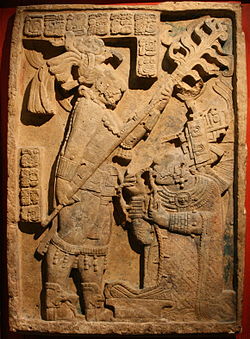
[Poem] Lady Xoc


Jesus marimba, lady, your noble rite
Leaves me with nightmares.
Jack the Ripper and Doctor Lecter
Have nothing on your offers
Of paper, blood and flame
From your well-traveled tongue.

The taste of midnight thorns from
Fragrant Yaxchilan shrubbery
Are regal semaphore flags 
Fluttering for the coldest heavens.

Shield Jaguar with his raging torch covertly 
Averts his stony gaze from 
The barbed stingray tail dangling within 
Your delicate hands, struggling not to wince.

"It is the smoke," he mutters.
To blanch: Unbecoming of a warrior king.

My department says I’m an ethnocentric brute 
Who understands nothing
Of the demands of power among the Maya.

My American judgments have no place
Amid your holy incantations, and I will be
Ostracized like Socrates for suggesting 

Our First Ladies should be grateful 
Things turned out this way
And not the other.

From BARROW, 2009
February 20th is Presidents' Day


Sunday, February 19, 2012

[Poem] Song For A Sansei


I remember her story

Of a white life

That took some getting used to.

White family. White holidays. White food:
Codfish, cauliflower, vanilla pudding, potatoes and
Gravy, poultry, etcetera, etcetera, etcetera.

A life of snow in which
I, too, find the mirror of I Am

Not necessarily followed by "made of,"
Perhaps simply "Among, with love,"
That you can’t help in a world like this

I’d meditate more on her graying words
But the jazz-soaked bartender at the edge of this dark room
Is reminding me

We only get 5 minutes each
To talk about our own yellow lifetimes.

From Japonisme, Laoisme and Other Poems, 2012


On February 19th, 1976, President Ford's  Proclamation 4417 rescinded Executive Order 9066 for the relocation of Japanese Americans to internment camps during World War II.

Friday, February 17, 2012

[Poem] Anger


Coiling within, this? Not the face I would show you.
The roar beneath wires, the roar hushed by white noise
Blanketing the land.

Shadows, night's exiles: "Go fugitive in the streets."

Skylines punctuate sentences of geography with
Incessant luminescence.
Our world is aglow. There is no time
When all of the citizens of our city
 
Are asleep at once anymore.
 
I learned to despise without passion.
I rear up, a dragon.
I open my jaw, a tiger defending the last hour men drink.

I cleave open the heart of my lovers that I may rest in them,
Nestled against the storm.
 
My dispositions:
Collated.
Codified response, taking flight through banks
Of predictable information for the sake of cool conformity,
Instead of soaring

Across landscapes wired solely by
Rivers and the silence.  

From BARROW, 2009 

On February 17th, 1933, the Blaine Act ended Prohibition.

Thursday, February 16, 2012

The Steampunk Opium Wars at the National Maritime Museum


Madam Miaow's The Steampunk Opium Wars at the National Maritime Museum: A satirical extravaganza about China, Britain, imperialism and drugs in the 19th century in verse & music. See narco-capitalists & Chinese lawmakers slug it out, take part in a poetry slam, and watch the weirdest tea ceremony ever.

Of course, now I have to wonder what the Lao Steampunk response would be like.

[Poem] A Vision of Invasion

Someday I expect
Egypt will launch

A surprise attack
And pry the hands off Big Ben.

Whisk away the antenna of the Eiffel Tower
And carry off the rubble of the House of Commons.

Students of archaeology will travel from far abroad
To witness a history reclaimed and preserved

Beneath an unflinching sun
While Euromania sweeps the country

And bad copies of Spice Girl photos are sold to decorate tacky homes.
Oh, what do you care, poet?

They don’t even bother trying to preserve your heart.
My poems must serve as my canopic jars.
from BARROW, 2009


On February 16th, 1923, Howard Carter unsealed the tomb of Tutankhamen in Egypt.

Wednesday, February 15, 2012

[Poem] Tetragrammaton

Among the monotheists: We are children of the Word,
From the very first second in which light came to Be,
Before a witness was, a single eye blinked.

A mystic in New York will tell you:
He believes in the 72-syllable secret name of God,
Even more than the genome we spent half his lifetime collating.

"God is certain, chemicals are not," he says confidently,
His shallow face lit by a thin scented candle from India,
His great wall of used books behind him filled with unread passages.

In September in the basement of Qwest's center:
Young Khadra confirms for me
She knows all of the sacred names of Allah and still believes

As our world crashes.
Her faith, unfashionable, my words, so small.

We, laid off in October:
Barely warning or fanfare
While Russians remember
Their Great Revolution for Red Square.

Only a handful still revere the State's blushing face
Twisting on giant banners in the cold Muscovite wind.

"My name means 'Green'" Khadra says, waiting for our bus one last time.
"And it's true, I come from a nation of poets. Is yours such a place?"

I do not know how to reply, distracted. Thinking
How hard it was, to imagine

That single perfect word by which a universe might be made,

Watching a nearby wild flower and a monarch butterfly
Who both seem so free without these questions:
Destined to die with the first winter frost

But still enjoying their time together.

from BARROW, 2009

On  February 15, 20001, NATURE printed the first draft of the complete human genome.

Tuesday, February 14, 2012

[Poem] Kawaii

Mad master Muramasa at his forge
Made blades to bite the Tokugawas
From beyond the grave
Before poor Ieyasu was born.

“What a spirit it took!” I said at my desk.

Alas, in contrast,
my pencil can not kiss you
in even this brief lifetime.
from Japonisme, Laoisme, 2012


[Poem] A Thousand Smiles


What is beautiful if not unique?
Wisdom without kindness?
Life, free of true challenge?
May as well seek dreams without change,

        Poems without language.

Her stride awakes our stories.
Her smile,
Her breath,
Dawn at the edge of Nam Ou,

Returns our hearts to our limitless nations within us.

From Tanon Sai Jai, 2009