Showing posts sorted by relevance for query steampunk. Sort by date Show all posts

Monday, November 28, 2011

Lao Steampunk: Culinary arts in the retrofuture


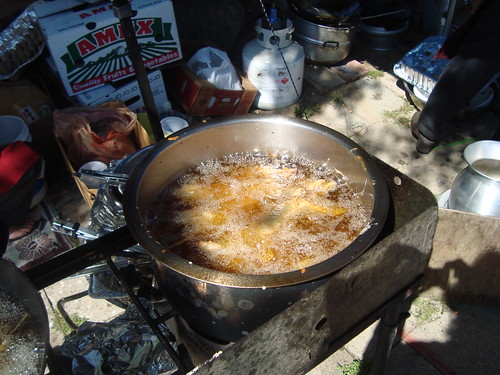
Over the Thanksgiving weekend, I found myself discussing the UNESCO Creative Cities Network that is designating various cities as model examples of different art forms, and also had a fun twitter conversation on what Southeast Asian Steampunk cuisine would look like.

Addressing the UNESCO Creative Cities network concept, what we saw were the usual forms you'd expect: Literature, film, music, crafts and folk art, design, media arts, and what I thought was particularly interesting, gastronomy.

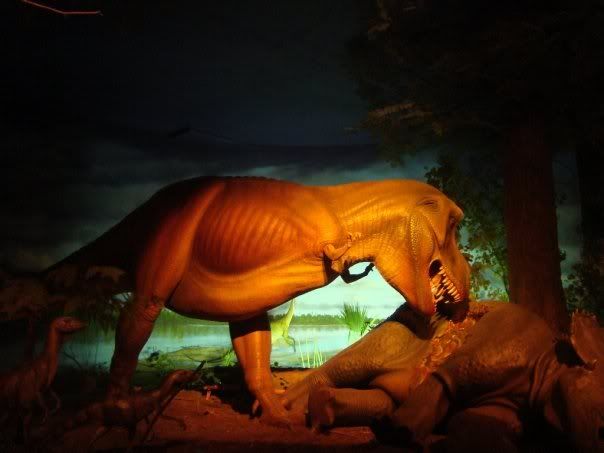
Before we go too much further, I should note that I'm also a fan of cryptogastronomy: the consideration of hypothetical recipes for mythic, theoretical and extinct species of flora and fauna. How might you pair a good wine with a 18th century Triceratops filet in the Lost World, for example?

But back to our subject.

I can find people showing me what theoretical steampunk ray guns and artificial wings look like, no sweat. We can now also find several Steampunk musical bands such as Steam Powered Giraffe:


But what's the Steampunk response to cooking?

A UNESCO Creative City of Gastronomy celebrates a city that finds a way to preserve local know-how, traditional culinary practices and methods of cooking that have survived industrial/technological advancement.

If you have a retrofuture, those guidelines become a very interesting question. But this is a subject that most novels and stories in a steampunk world give only passing consideration to before we rush off to battle air pirates and mad scientists.

It often feels we're in a rush to finish the meal, and the conversations are more important than what's being served, the where and the how, in a steampunk story. But these can matter. (Or anti-matter, depending on the science employed in the setting.)

When you've got so much heat being given off by steam engines and other technology, surely this creates both challenges and opportunity with cooking and dining practices.

There are a few exceptions to the artistic exploration of steampunk cooking, such as Fuel for the Boiler: A Steampunk Cookbook, and of course the steampunk cakes that suggest in the retrofuture, people would employ motifs that reflect what's surrounding them such as gears and cogs.
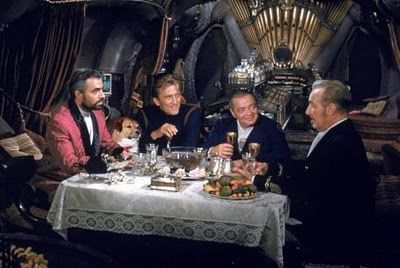

We see many dining scenes in classic steampunk films such as Atlantis: The Lost Empire, 20,000 Leagues Under the Sea, and Steamboy, just to name a few, but little consideration for what's practical and possible in a steam-powered diet, and how that would affect characters' health, habits and societies.


Most of the dishes we've seen proposed in the genre have explored it from a distinctly European-American perspective, but I think there's a good deal to be learned from examining how Asian nations would embrace cooking in a steampunk world.


For Asian nations in a steampunk world, there's a wide range of dishes that they would enthusiastically adapt to take advantage of high-powered, high-temperature steam technology. Rice steaming, dumplings and other dim sum staples immediately come to mind. So do steamboats and hot pots.

Would certain cultures gain advantages in being able to produce large amounts of food for their crews and entourages quickly? How might they view something like a slow-cooked barbecue?

When you have the ability to steam something within seconds rather than hours or minutes, you've reduced cooking time and you might get more time to talk with your guests at the dinner table if you're the cook. But it might work the other way: You face conversations that are very rushed because you're not waiting long together for the food to finish cooking after you've placed your order.

Will ingredients be chosen for their ability to be steamed quickly, or those that take longer to steam well? Will those that don't lend themselves well to steaming gradually fall by the wayside? Which substances will be stored aboard ships for their versatility, or despised for being excessively soluble in water?
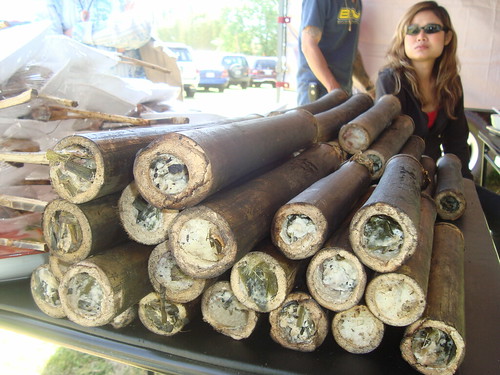


Might we see flash-banquets emerge as an art-form, where chefs are challenged to create the most intriguing repasts that can be prepared with a set of steamers? Steam Iron Chef, if you will...

But for an underclass, this could lead to shorter meal-times and longer workdays. "What do you need a half-hour for? It takes a minute to make your soup and sandwich. You get five minutes, then back to the machines."

Especially in the industrial dystopias of steampunk, where life is nasty, brutish, short and hot, meals and how we take them have a way of sending messages within a culture and across cultures. Hopefully, some authors will take those into deeper consideration during their world-building process.

Monday, May 21, 2012

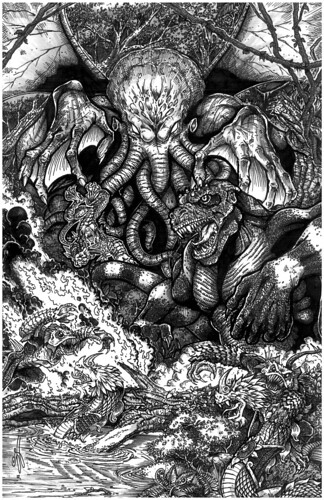
[Lao Steampunk] Steampunk Cthulhu

One of the interesting projects due at the end of July is submitting to Brian M. Sammon and Glynn Owen Barrass' Steampunk Cthulhu anthology for Chaosium. "The age of steam meets the age of Cthulhu, in a past where technology unbound warps Victorian Britain and the world at large into a dark Steampunk reality." is the overall aim.

So, I find myself preparing an all new short-story, wondering how to pull it off.  As much as I'd love to try it, I don't think I can do a Steampunk Cthulhu speculative poem justice at the moment. I should say, though, more than a few tongue-in-cheek titles have come to mind, such as the "Cogs of Cthulhu,""Anna and the King in Yellow," "The Steam Over Innsmouth," and "The Contraption Out of Space." It would be particularly apt to do a steampunk take on "The Fungi From Yuggoth" given that it was a long speculative poem from Lovecraft. Perhaps "The Last Brain to Yuggoth"?  Nah.

On a more serious note, however, these are some of the questions I find myself considering as we prepare such a story.

How do you successfully reconcile two seemingly contradictory genres. It's not the subjects. As we've seen with anything from Hong On the Range to Firefly, you can make space westerns work, for example. But to me the greater challenge is resolving the underpinning philosophies.


In Steampunk alternate history, most of the protagonists are outsiders who are alienated from the mainstream society. This is compatible with a Lovecraftian story. However, we find ourselves faced with a genre that typically positions the retro-future as a space where individual pluck, technology and science can overcome any obstacle to save the day. It's often optimistic noir with more than a tinge of romanticism and nostalgia for a by-gone era that never was.

Lovecraftian stories on the other hand, are compatible with Steampunk settings for the brooding, noir atmosphere of decadence and decay. But they also operate within a cosmos where there are things humanity was not meant to know, cannot know, without descending into cosmic insanity. Science, reason, human efforts are feeble and meaningless in the face of all of this. 

While both genres are capable of dealing with shades of grey, a Lovecraftian protagonist at best can hope to forget what they have encountered, or at least is going to be squished quickly by the end of the terror. So, what do we do with Steampunk protagonists operating under Lovecraftian conditions?

Of course, to create a good story that is appropriate to the theme I feel you have to navigate a fine line to avoid the criticisms of both genres. For Steampunk, the possibility of Empire-fetish, for Lovecraftian stories, the possibility of exoticizing and demonizing the Other, given his historic fear of foreigners and just about everything else under the sun. Steamcraft at its worst could be filled with many pro-Colonial stories of putting down subhuman, degenerate savage races. And that should raise eyebrows.

Since my hope is to turn in a Steampunk Cthulhu short story set in Laos, which once lived under French colonial rule during this era, there are therefore particular issues I consider such as the necessity to tell a story in which falang appear at all, or have to be acknowledged. With the 160 different ethnic communities that lived in Laos at the time, it's possible and perhaps preferable to create a lost tribe to serve as antagonists rather than use an existing one. 

For this story, I'd also rather keep away from noble-fetish, romanticizing the role of elites of the society. In traditional Southeast Asian literature, there's often a tendency to ignore the story of 'commoners' and everyday people in the narratives. It's almost always centered on the princes and princesses. Which to me goes against the 'punk' aspect of steampunk. Their protagonists often work best when they're NOT the ones supposed to be in power.

And of course, as I try to incorporate authentic or historically plausible elements into this work, I hope not to have the problem I had with 'The Journal Who Shall Not Be Named' that apparently had no problem dealing with shoggoths and deep ones, but suggested no one was going to buy into a race called the Hmong, among other issues.

But overall, I've found the process to be invigorating and enervating. With a limit of 8,000 words, it seems there's surprisingly little space for world development. I would say the breakdown thus far looks like: 25% world building and setting, 25% characters, 25% plot action, 25% technology and horror. But we'll see what comes out in the final equation.

How would you approach the Steampunk Cthulhu concept?

Tuesday, November 22, 2016

Presenting on Science Fiction Poetry at LOSCON 43


As the new President of the Science Fiction Poetry Association, I'll be discussing Speculative Poetry at 5pm this Saturday at LOSCON in Los Angeles, and will be there throughout the day to meet with poets and readers along all points of the speculative literature continuum!

I'll be speaking along with noted SFF scholars and writers Jaymee Goh and Nikia Chaney!

Per the panel description:
Speculative poetry is a rising professional field in our infinitely diverse genre! The Science Fiction Poetry Association elected Bryan Thao Worra as its new president; new markets have arisen offering professional rates for cutting-edge poetic forms; new stars are coming out of the poetry field exploring the speculative in what is a very experimental form. Find out more about where you can read such works and where the field might head into next!


Jaymee Goh is a writer, editor, and critic of science fiction, also known as the "steampunk postcolonialist." Her fiction has appeared in Expanded Horizons and Crossed Genres, and in steampunk venues such as the Steam-Powered Series and Steampunk World. She has been quoted in Jeff and Ann Vandermeer's Steampunk II: Steampunk Reloaded, as well as The Steampunk Bible, and has written steampunk-related non-fiction in The WisCon Chronicles 5 & 6 and Steampunk III: Steampunk Revolution. Her blog, Silver Goggles, tackles postcolonialism and racism in the various forms of steampunk. She is currently working on a PhD in Comparative Literature at the University of California, Riverside, where she is writing about steampunk material culture and a critique of its aesthetics. Beyond steampunk, she is interested in issues of radical womanism, utopia, sustainability, critical race theory, agriculture, and botany.


Nikia Chaney is the current Inlandia Literary Laureate (2016-2018). She is the author of two chapbooks, Sis Fuss (2012, Orange Monkey Publishing) and ladies, please (2012, Dancing Girl Press). She is founding editor of shufpoetry, an online journal for experimental poetry, and founding editor of Jamii Publishing, a publishing imprint dedicated to fostering community among poets and writers. She has won grants from the Barbara Demings Fund for Women, Poets and Writers, and Cave Canem. She teaches at San Bernardino Valley College.

And for completeness sake:
Bryan Thao Worra is the president of the Science Fiction Poetry Association, an international literary organization celebrating the poetry of the imaginative and the fantastic. A Lao American writer, he holds over 20 awards for his work including an NEA Fellowship in Literature and was a Cultural Olympian representing Laos during the 2012 London Summer Games. The author of 6 books,his work appears internationally including Australia, Canada, Scotland, Germany, France, Singapore, Hong Kong, Thailand, Korea, and Pakistan. You can visit him online at http://thaoworra.blogspot.com for more news on Asian American science fiction, fantasy, and horror.

LOSCON is Los Angeles' longest running Science Fiction & Fantasy Convention, held Thanksgiving weekend by the Los Angeles Science Fantasy Society (LASFS). This year's Guests of Honor include David Gerrold, Peri Charlifu and Nick Smith!

Be sure to come join us at the Los Angeles Airport Mariott at 5855 W Century Blvd, Los Angeles, CA 9004


Saturday, November 05, 2011

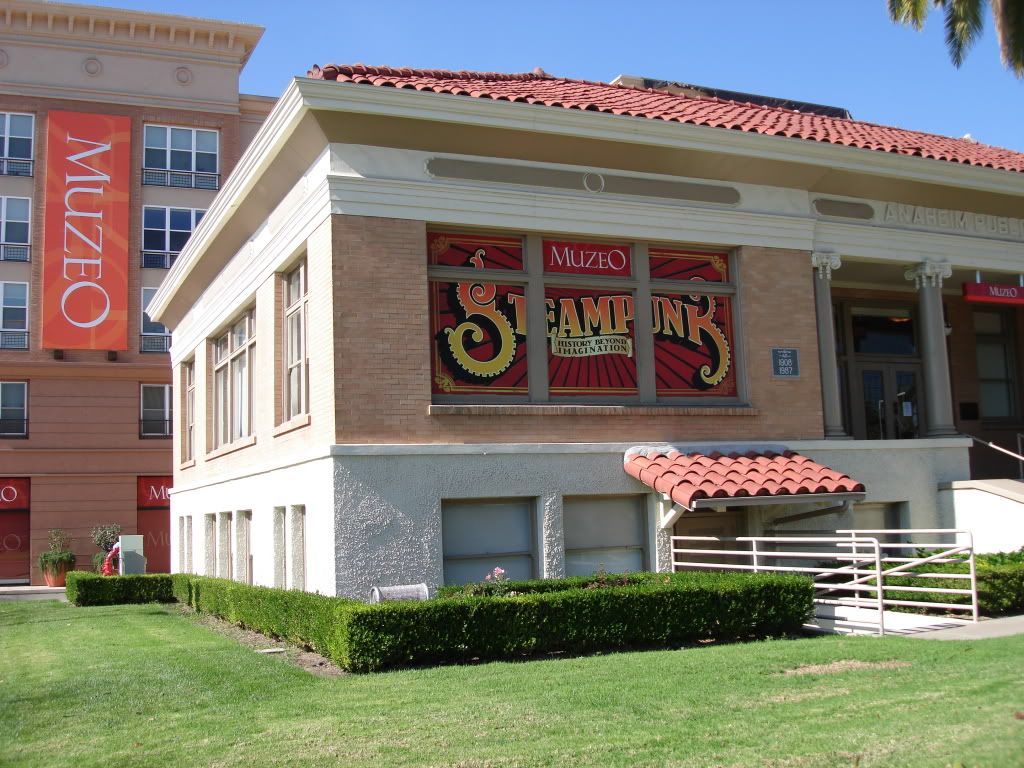
Lao Steampunk Sundays: Muzeo Exhibit

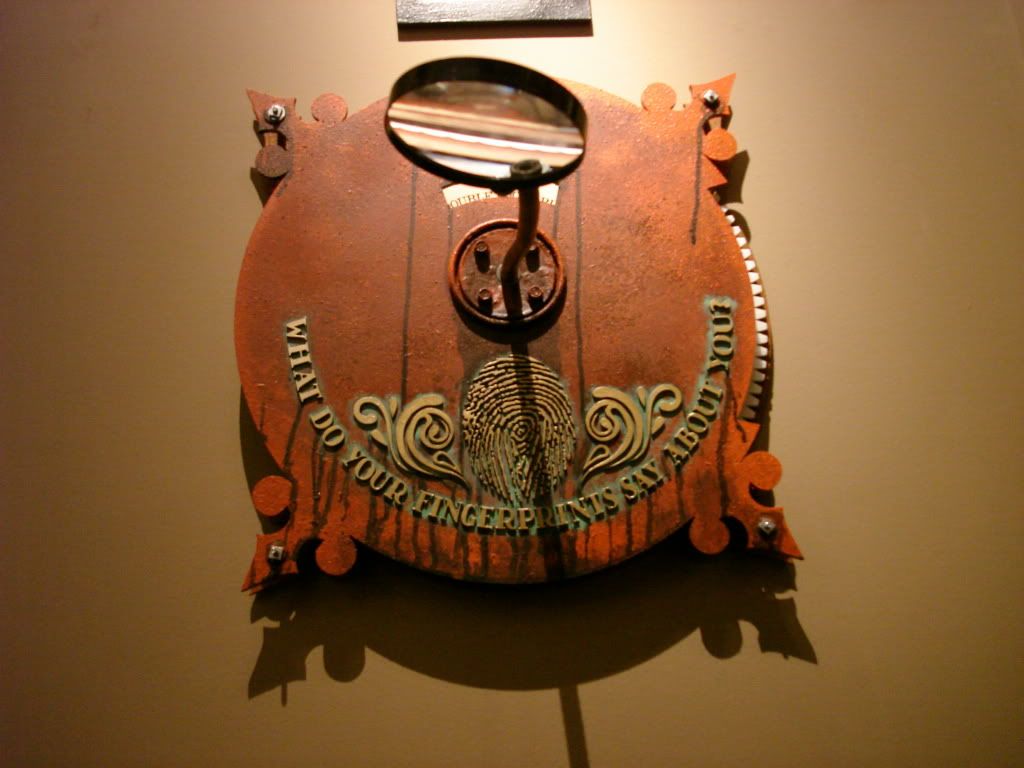
This season in Anaheim, California, they're conducting a exceptional exhibit on Steampunk and Victorian era art and cultural objects at the new Muzeo museum. It's well worth attending for $13.


Muzeo frames the exhibit by stating that "Steampunk" is considered by many to be a growing modern reaction to man’s conquering of scientific boundaries. As technology and science took us beneath the sea, to the Earth’s interior and even to the moon, humanity began to wonder if its reach had, indeed, exceeded his grasp. Writers, artists and craftsmen began to entertain the notion of what life would have been like had circumstances pushed these innovations just a little bit further. We might have had computers before gas combustion engines, the Internet before the microchip, or warships in the air before the Wright Brothers ever flew. This spawned a whole new sub-genre of science fiction - Steampunk. With this new sub-genre came a whole fresh aesthetic...a Neo-Victorian examination of clothing, gadgets, art, music and literature."


Most of the items on display from the steampunk exhibit are domestic but there's a good range including a number of original art pieces from Phil Foglio, the mind behind Girl Genius, easily one of my favorite steampunk comic strips. 

They also displayed concept art for the League of Extraordinary Gentlemen, and extensive overviews of the work of Robert Louis Stevenson, H.G. Wells, Jules Verne, and Sir Arthur Conan Doyle. A discussion of Charles Babbage and his difference engine was of course included with the proposal that had he been successful we might have had home computers before the Wright Brothers perfected flight.


H.G. Wells' Time Machine was supposed to be on exhibit but apparently got lost in time on the way.

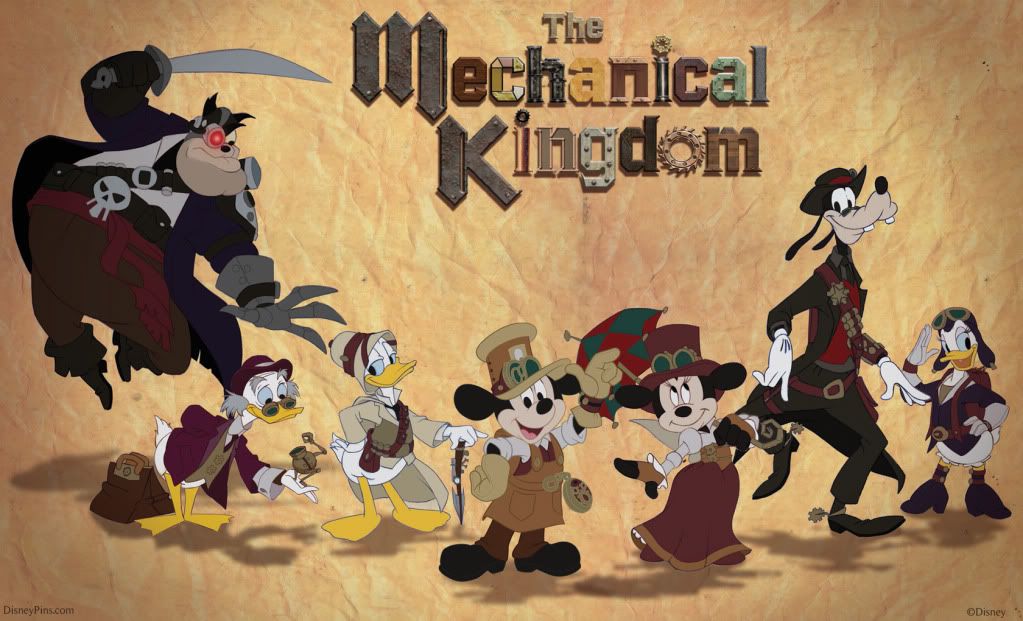
There was a strong presence of the influence of steampunk on Disney and Disney's role in inspiring the steampunk aesthetic. Atlantis: The Lost Empire and 20,000 Leagues Under the Sea are featured, for example, as well as Disney's Mechanical Kingdom:


The strangest element of the exhibit was the notable absence of discussion regarding the Japanese influence on Steampunk aesthetics, or really, other cultural responses from around the globe, such as South America or Russia.

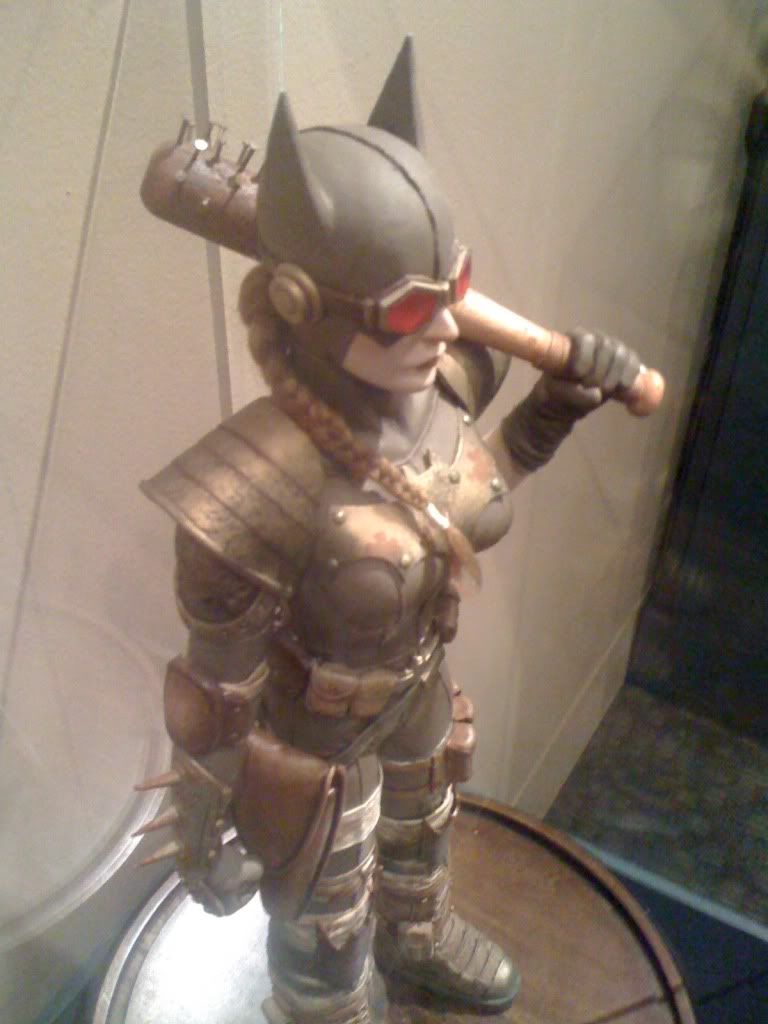
Steampunk has a habit of mixing with many other pop culture concepts, and this exhibit demonstrated this with several examples, notably Steampunk Batgirl who's running around with a real bat.


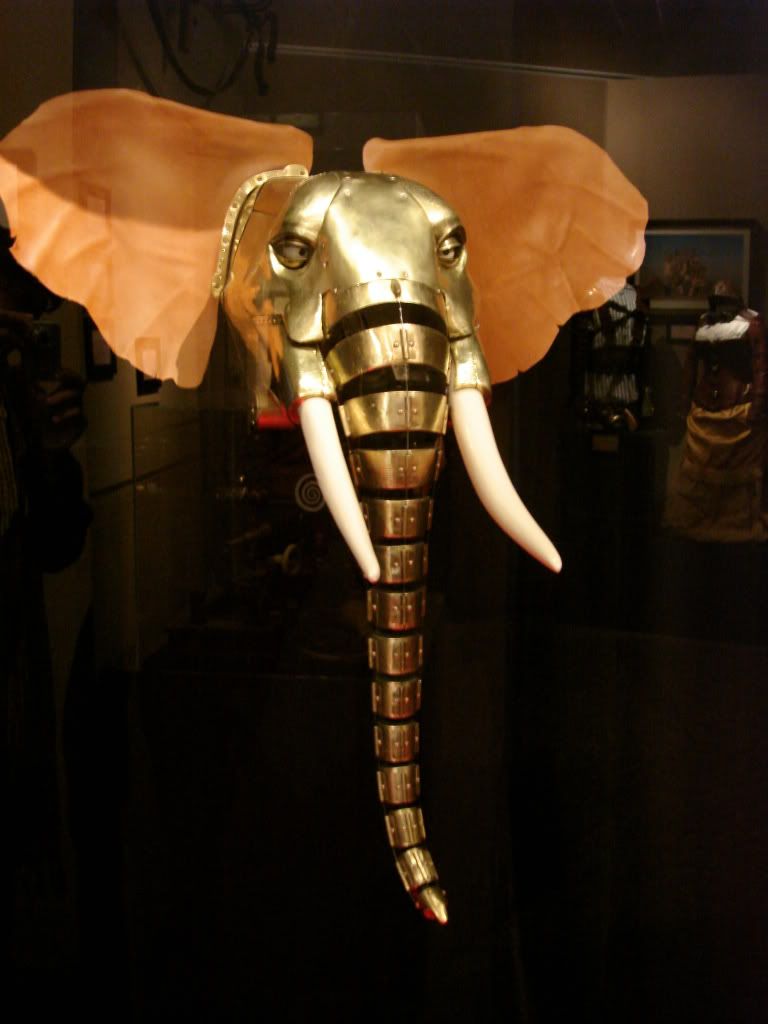
One of the pieces I'd been looking forward to as a Lao artist was the steampunk elephant, which was an impressive brass puppet. I would have loved to have seen in action but even behind glass, it is more than enough to stir the imagination of what is possible. 


I was impressed by the aesthetics and humor behind the steampunk vampire hunting kit. I wondered what an equivalent would look like for use in Southeast Asia against phi and nyak:


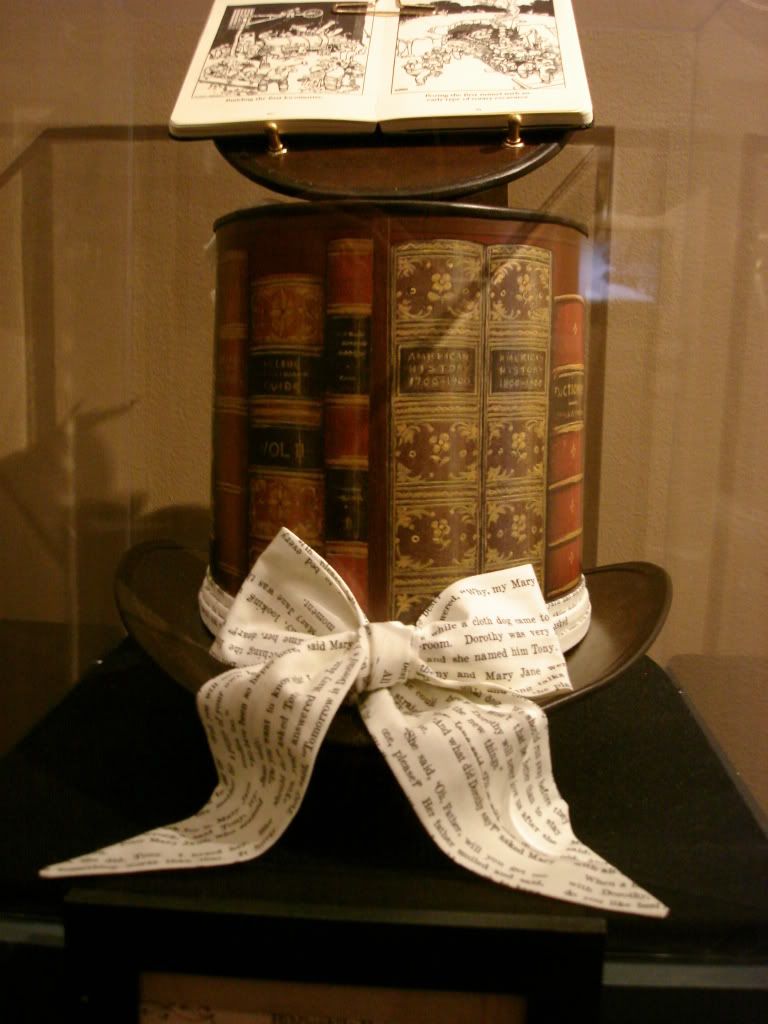
By far, my favorite was the practical accessory, the Bibliophile Hat. It would allow you to store a book and or writing kit in it, and included a bookstand with a page holder in the lid that was perfect for taking tea with. If I was stuck in the retrofuture, this would be my hat of choice.


What really makes this exhibit outstanding, however, is the historical Victorian exhibit in the other gallery of the Muzeo. When you see the history that happened so closely juxtaposed to the history 'that could have happened' it's really quite amazing. 

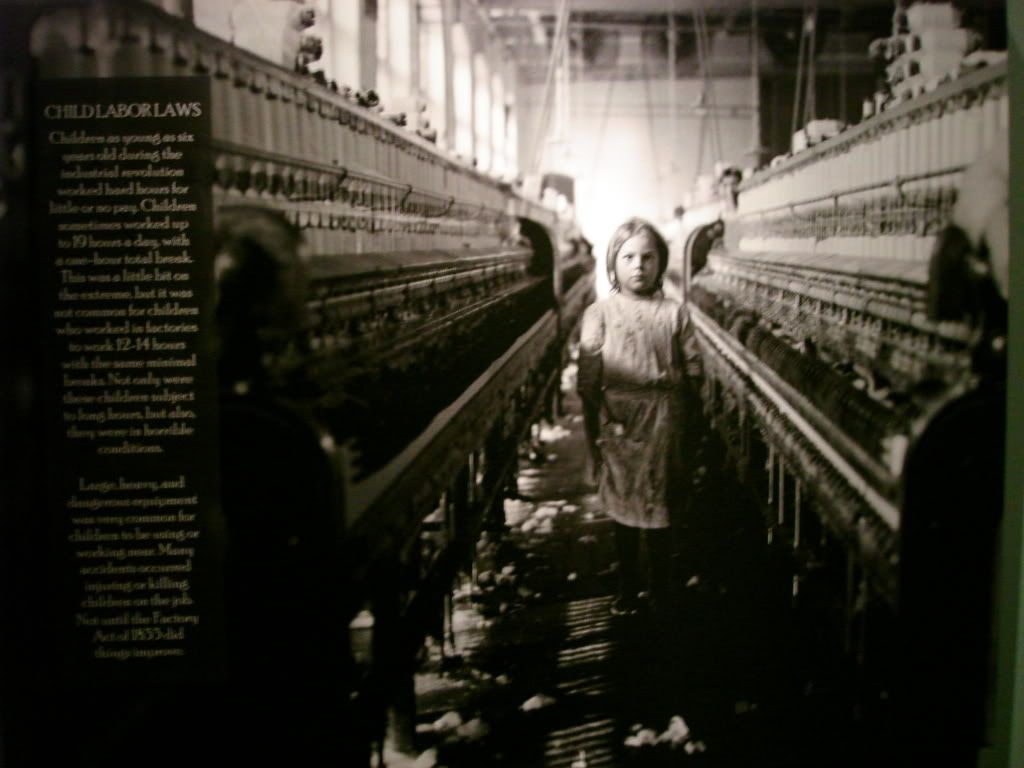
The exhibit doesn't flinch from opening with a note on the social conditions of the time that concerned people living in the empire, such as child labor. They also drew attention to a near constant state of war. They exhibit points out there was a military clash every year somewhere in the Empire throughout the entirety of Queen Victoria's reign, notably the Crimean War. 


We see the British Empire's art and literature flourished tremendously during this century, along with technological advances. As artists and human beings we must ask: Does great conflict produce great advances? It's the Harry Lime question from the Third Man, I suppose.

There was an amazing range of walking canes on display that showed a dizzying array of personalization in materials, decor and utility. Professional canes stored anything from scalpels for a surgeon to easels, brushes and paints for an artist, or bottles of perfume and fans for ladies. They also demonstrated the wide variety of match safes, cheroot cases and coin purses that demonstrated status and uncommon personality.

I can see to a degree why many would be nostalgic for this era compared to today's mass production. The variety of ways for self-expression, if one had the means, was extraordinary. 

The exhibit explored the rise of Orientalism and the demand for goods and objects from the East that were considered exotic, and how Indian artists, among others, worked to create art about different cultures to build even greater demand for such objects. The notable example to me being an intricate Indian sculpture of exotic Chinese mythological figures for export to England.

There's a lot I've walked away with from this. Some interesting possibilities for alternate history, but also many concerns that writers ought to engage with, especially those of us from post-colonial communities. But that's a topic for another post. See this exhibit if you can. 

Tuesday, September 06, 2011

Lao Steampunk: Further consideration


A big thanks to everyone who has chimed in about Lao Steampunk! A few thoughts came up about plausible Lao Steampunk and how to develop a good story in such a setting. 

Because so much of the history remains contested, I add my customary recommendation to do as much research as possible on the real lives and times of the Lao and others in this era. Historical documents should be considered for their respective bias. It should go without saying that their bias is extremely heavy by our standards today.


Because Steampunk often relies on clockworks, spring-driven and steam-powered devices, it may be useful to bear in mind that the first known mechanical clock to arrive in China was introduced on December 27th, 1582.

Lan Xang splits into several kingdoms around 1707. This could provide a plausible opening between 1583-1707 or approximately 124 years in which someone from Lan Xang could have made an effort to acquire and study these mechanical devices that drives most Steampunk technology. Historically mechanical clocks in Asia were considered novelties and not applied towards scientific or utilitarian purposes for many years.

Technologies of particular interest are those connected to transport. A good majority of travel is conducted by rivers, especially along the Mekong. Railroads were difficult to introduce to the region until very late in the Victorian Era, with the first notable one connecting Bangkok to Ayutthaya following a year of construction in 1892. But what might have happened if more railways or steamships had been available during this time or earlier?

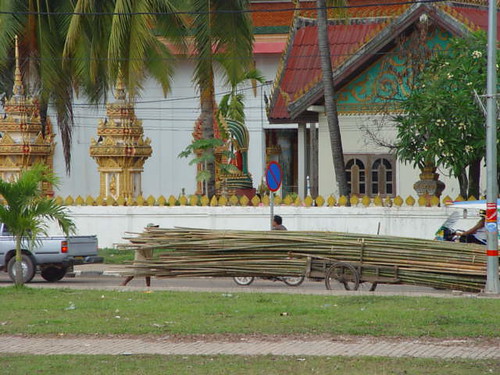
Tin, copper, and gold in addition to teak hardwood and bamboo are key natural resources Steampunk technology would be made from in Laos. Gypsum is also an abundant resource here.


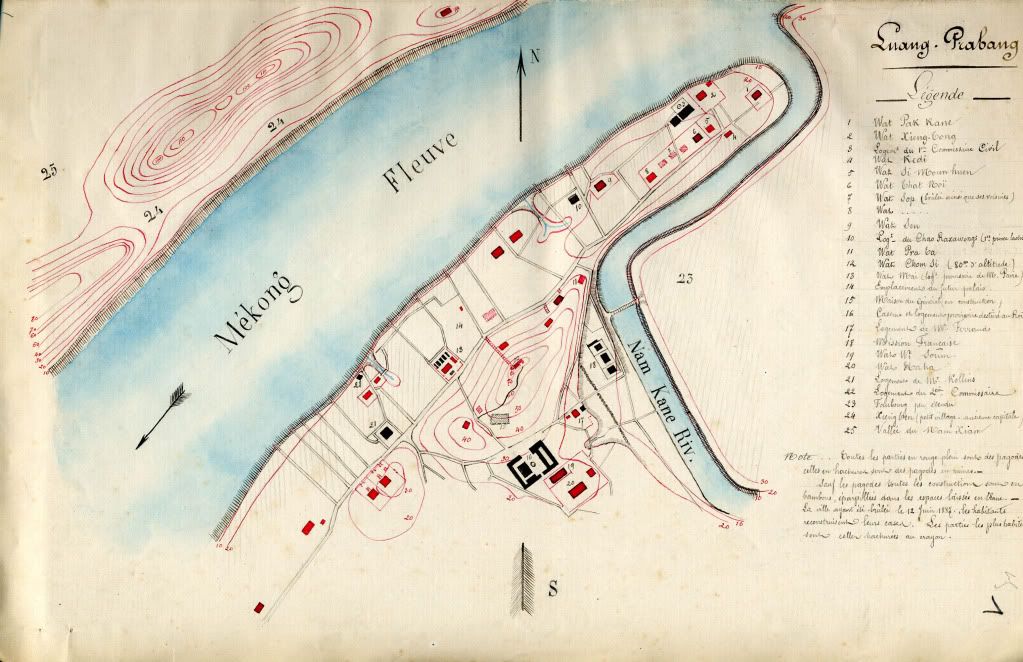
The most likely setting for Lao Steampunk stories would be in or near Luang Prabang, the royal capital of Lan Xang, and comparatively easier for writers to research compared to the limited, almost non-existent historical records that survived for Vieng Chan and Champassak.  However, aspiring authors may find this lack of documentation actually eases the writing process by allowing them to fill in the blanks with their own alternate history with reduced fear of contradiction.

King Oun Kham ruled Luang Prabang from 1872-1887 and 1889-1895 while the French were a major presence there. His predecessors included King Anourathurath from 1792-1819, and King Chantharath who reigned from 1850-1868. They were all particularly known for overseeing the construction of Buddhist monasteries in the realm of Luang Prabang, with over 65 wats recorded before the invasion of the Black Flag bandits in 1887. After 1887, most of these wat Lao had been destroyed. Just over half of these complexes were rebuilt and restored in the years afterwards.


Most Lao Steampunk stories would find a point of inspiration in the complicated politics and beliefs of the era, including debates to embrace new technologies and how they should address Western expansionism.

Among the schools of thought influencing these societies are Buddhist principles, notably the 5 precepts, and Lao folk law. Many of the ethnic minorities at this time practice forms of animism and shamanism. Confucian ideas came from the north from the Yunnan province of China, and to a lesser extent Taoism.  The influence of Hinduism should be noted. These beliefs are relevant because Steampunk stories often focus on class divide and the violation of social mores through a Victorian monotheistic lens. Stories set in Laos could explore the punk aspect of the genre by having protagonists wrestle with Southeast Asian principles of decorum, which are not fully interchangeable with East Asian and Western mores. How might a strong belief in reincarnation, karma, and dharma drive Lao Steampunks' interaction with technology and their society?

A Lao Steampunk story would take into consideration the international interests present at the time. There is definite engagement and interaction with their geographic neighbors, including China, Annam (Vietnam), Cambodia, Burma, the Shan States and Siam (Thailand), as well as the kingdoms formed from the split of Lan Xang. Much of this century is marked by conflict and violence nearby and in the three kingdoms that would one day become Laos.


During the Victorian Era the British are relative latecomers but establish a significant influence in Siam, the Shan states and Burma. Europeans from Portugal, the Netherlands, as well as the Dutch and Spanish arrived much earlier, setting up missions, colonies and trading stations to the south.  The French begin significantly exerting military force around 1883 using the Tonkin Expeditionary Force in northern Annam, but many missionaries and explorers had traveled there earlier.


I advise people planning to write a Lao Steampunk story to look at the notes and journey of Auguste Pavie whose missions played a significant role in the relationship of the French to Southeast Asia, particularly Laos and Cambodia.

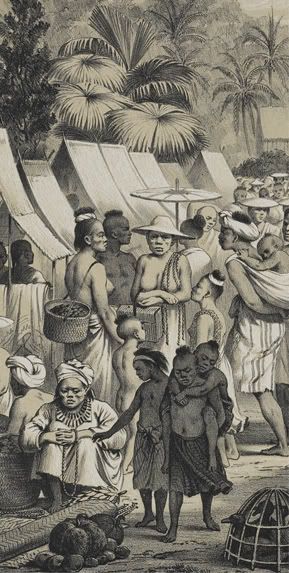
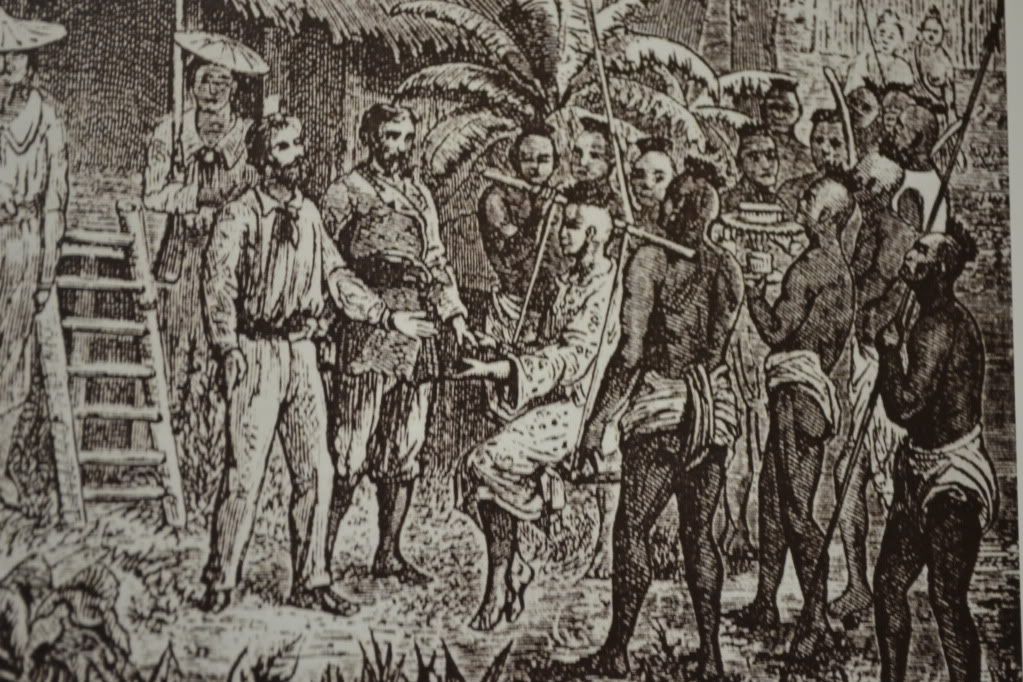
Pavie took with him as many as 40 scientists, soldiers, artists and diplomats with him to survey the region, building relationships and making notes of it all from a scientific and social perspective. Many of the photos and illustrations for this post come from the Pavie mission. White Lotus Books has a collection of his notes translated into English.


King Mongkut or Rama IV ruled Siam from 1851-1868 and dealt with Western expansionism, but embraced many of the innovations and technologies from Europe. For this, he became known as the "Father of Science and Technology" in Siam. Around 1852, Rama IV hired western mercenaries to train his army in European combat techniques. He was succeeded by his son Chulalongkorn or Rama V, who would rule from 1868-1910. One of the great challenges of Rama V's reign was enacting policies that would enable them to resist colonization. The Lao kingdoms and Siam came into conflict during the early 1800s which left a significant amount of the Lao infrastructure destroyed or heavily damaged, particularly in Vientiane. This is still something of a touchy subject, and I would recommend examining the subject sensitively.

Steampunk often addresses secret societies and a criminal underworld. Lao society from this era does not actively note secret societies or criminal underworld organizations similar to those in Europe or the Yakuza or Triads. But this does not mean that a writer could not speculate how a more formal group could exist.

Writers looking for antagonists may wish to note the Haw Wars, particularly the Black Flag Bandits following the disbanding of their army in 1885. Led by Liu Yongfu, the Black Flag Army harassed the French between 1857-1887. Most were ethnic Zhuang bandits from China who had the support of Annam and Chinese authorities in trying to drive the French from the Southeast Asia.

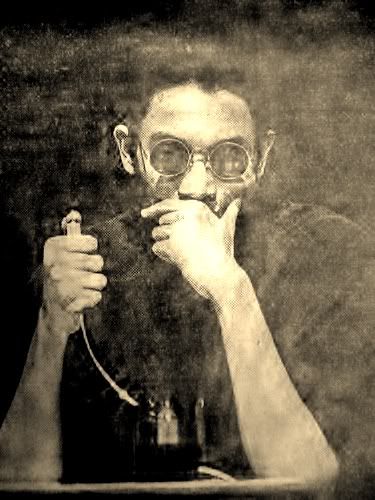
A Black Flag Soldier, 1885

Lao Steampunk can tell many interesting stories regarding many of the different unexplored, undiscovered cave complexes that abound in the country at this time.

Take for example the recent discovery of the Xe Fang Bai river cave in central Laos. Many adventures could begin here or similar cave complexes, including homages to 'Journey to the Center of the Earth' or 'The Lost World':


Hopefully, this gives you some additional inspiration and energy to explore the fascinating possibilities of Lao Steampunk fiction and alternate history. What are some ways you would approach this genre?

Sunday, September 18, 2011

Lao Steampunk Sundays!

Thanks to everyone who's been providing great feedback on what would happen if Lao and Lao American writers took on the genre of steampunk. There are enough interesting angles that for the rest of the year, I'll be committing at least a few of the Sunday entries for On The Other Side Of The Eye to different topics connected to Steampunk, and what aspects might be of particular interest for writers' work centered from a Lao perspective.

This recent video about an upcoming documentary on Steampunk helps explain what the attraction has been for many communities: http://www.youtube.com/watch?v=TW5trrXS1e8&feature=player_embedded


An initial resource to the wider world of emerging Southeast Asian role-playing, steampunk, fantasy and other topics, I would happily turn readers towards Hari Ragat Games and their blog at http://hariragat.blogspot.com. As a Filipino, the blog's author has an earnest desire to break the pattern of ‘Asia ends at Japan and China’ in mainstream roleplaying games. And a lot of those goals intersect with my own work with Lao American speculative literature and the various genres that might fall under this umbrella.

His recent entry http://hariragat.blogspot.com/2011/09/speak-out-with-your-geek-out_17.html is a great introduction for those just starting to read his blog.

Beyond Victoriana will also be another blog I'd recommend writers examine for added perspective on Steampunk and broadening the potential and visions of what steampunk can be. Of course, I'd happily receive recommendations for sites and resources that may be of interest for Lao writers working on steampunk topics.

I would also add in http://silver-goggles.blogspot.com as another great place to see how similar ideas are percolating. A big thanks to them for providing a great preliminary reading list for us to consider. I'm looking forward to seeing more emerge in the future.

 Again, thanks, everyone for your input and I look forward to continuing this discussion with you.

Sunday, September 25, 2011

Lao Steampunk Sundays: Further Considerations


As part of our ongoing series of discussions regarding the writing and development of Lao Steampunk, we recently asked about the viability of greenpunk where citizens of Lan Xang moved towards an eco-friendly society.

One of the questions for writers as we build the world of Lao steampunk will be what kind of characters populate such a society?

To answer that, we might take a look at the traditional professions Lao folk law believed were essential. According to Preeha Phinthong's 1982 Thai/Issan Customs, and others, a king was obliged to follow at least 14 laws, and a city ruler was to provide for the 14 auspicious qualities:
  • First, to have the ear of the city which means to have wise diplomats. 
  • Second, to have the eye of the city which means to have poets and wise men. 
  • Third, to have the core of the city which means to have monks or holy men who are knowledgeable in the Dhammic Disciplines. 
  •  Fourth, to have the gate of the city which means to have sufficient weapons for the city's defense. 
  •  Fifth, to have the foundation of the city which means to have able royal astrologers who can foresee future events. 
  •  Sixth, to have the root of the city which means to have brave and just royal relatives and administrators. 
  • Seventh, to have the crossbeam of the city which means to have courageous and strong military forces. 
  • Eighth, to have the wall of the city which means to have honest and faithful village chiefs. 
  •  Ninth, to have the beam of the city which means to have able and moral ministers and noblemen. 
  •  Tenth, to have the boundary of the city which means to have able ministers to take surveillance of the city boundaries. 
  •  Eleventh, to have the sense of the city which means to have wealthy merchants and businessmen. 
  •  Twelfth, to have the heart of the city which means to have able physicians and royal daughters. 
  •  Thirteenth, to have the resources of the city which means to have rich natural resources such as gold and silver mines, trees, and quality citizens. 
  •  Fourteenth, to have the clouds of the city which means to have the patron spirit of the city, the city post, and guardian deities.
Now, as you can see, there are a number of professions and callings that aren't listed here, but this doesn't mean they weren't essential to the society. Including several really obvious one related towards food production. But this already begins to provide a number of fascinating figures one can write about as they engage with Lao and falang technology.

There are a number of character types often found in more mainstream steampunk stories that would be worth considering for incorporation: 

Inventors and scientists, of course. The formal scientific method began as early as Ibn al-Haytham in the 10th century. He proposed "Truth is sought for its own sake. And those who are engaged upon the quest for anything for its own sake are not interested in other things. Finding the truth is difficult, and the road to it is rough." This would resonate with many who are following the 5 precepts of Buddhism.

As an interesting aside, the first working steam-powered vehicle was probably designed by Ferdinand Verbiest, a Flemish member of a Jesuit mission in China around 1672. It was a small toy for the Chinese Emperor, that was unable to carry a driver or a passenger. In real life, there isn't proof that this design was actually built, but it does mean that an alternate history story could plausibly introduce cars of varying levels of reliability in this era to Asia.

Explorers and guides. Personally, I've enjoyed telling stories from the perspective of guides to falang as a necessary counterweight to the usual Gunga Din and Pocahontas figures that typically populate literature. 

Falang Industrialists. Typically members of the middle class in the 19th century, they set up factories and drove a significant deal of commerce, interested in finding good, steady sources for raw materials. Should characters in a Lao Steampunk setting collaborate with these industrialists or would they be resistant to selling the diverse resources of Lan Xang to foreign powers? What would be the consequences?

Ressurectionists A profession restricted mostly to Europe, these were grave robbers who specialized in procuring parts or whole bodies for surgeons and medical students who needed bodies to study. What would bring them to Lan Xang?

Missionaries A significant amount of Southeast Asian politics was shaped by the actions of European missionaries during the 18th to 20th century. It's possible to write good Lao Steampunk stories without them, but they can also definitely be characters.

Of all of the characters common to mainstream Steampunk literature, this is one that can be among the most touchy to include, especially for post-colonial writers. My big caution would be that it can be especially difficult to put yourself into the missionary mindsets of the 18th and 19th century, whose motives and world paradigms are very different from ours today. But if you think you can handle it responsibly, interestingly and well, I'd say go for it.

Urchins have been a common character in Victorian literature, among the most well known being Charles Dickens' Oliver Twist. It would be a stretch to bring one over from Europe, but on the other hand, Southeast Asian literature is filled with tales of orphan boys and girls and what they do to try to survive.

Thieves, Bandits and Pirates We talked a little about the Haw Wars and the Black Flag Army who eventually became the Black Flag Bandits in Laos while fighting the French and marauding the countryside. A Lao Steampunk story can examine even more possibilities, given the presence of airships, steamships and similar vehicles. The classic story of Captain Nemo, also known as Prince Dakkar in 20,000 Leagues Under the Sea and The Mysterious Island was the son of an Indian Raja. There are many interesting possibilities here.

Again, we're talking alternative history here, so the sky is the limit, but hopefully this is a helpful place to start. What are some character types you could see fitting well within a Lao Steampunk setting?

Monday, October 10, 2011

Lao Steampunk: Continued research


It's been an interesting week of research and musings with other members of the steampunk community, particularly those of us working from a non-Eurocentric approach to alternate history. I appreciate the input.

For Lao and Lao American steampunk, I think Xangpunk or Nakpunk/Nagapunk might be the most interesting terms to use in place of Ricepunk, which I find a little too close to the Rice Burner or Rice Rocket pejoratives. Some others have suggested Silkpunk, while a good many of us hate Victoriental.

Idly, I considered SilkWind (like winding a clock or the wind for an airship) but we can hash that all out another day.


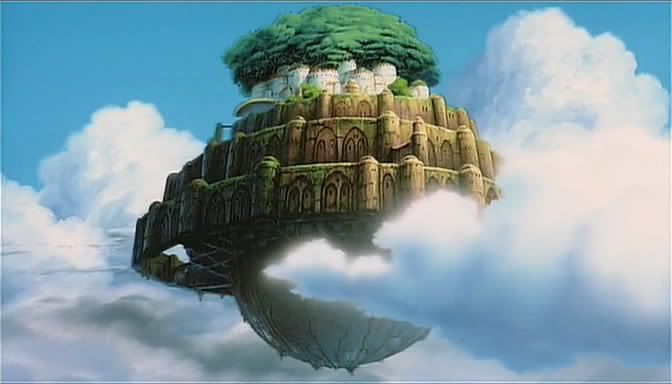
I found myself looking at both the Jackie Chan vehicle Around the World in 80 Days and two of Miyazaki's classics: Castle in the Sky and Princess Mononoke.

It should be no surprise that for a number of reasons I prefer Miyazaki's work, where the culture is dynamic and organic to the story. It's nuanced and textured. Sometimes the laws of physics are broken for the sake of the story, but when you see an object, it feels like it was designed to function within those worlds and that its inhabitants needed them to function 'just so'.

By the end of Castle in the Sky, I found myself contemplating what buildings Lan Xang would want to make airborne. To me, the natural thought was a Wat Lao, rather than the Royal Palace. But I suppose there were several options.


Around the World in 80 Days has an admirable steampunk vibe to Verne's classic and takes significant liberties to update it and make it 'accessible'. But any time other Asians come on to the scene, it's just an exoticized mess filled with dragon ladies, yellow peril hordes and stilted fortune-cookie dialogue. It did make me wonder how different the film would be if you had Tony Jaa doing the martial arts instead, but I digress.


Over at Tor.Com, they posted an article on 'The Problem with 'Asian Steampunk' which makes some interesting points. But their approach can easily lead to culture vultures who pick elements of different Asian cultures as if they're monolithic and interchangeable.

I wouldn't want writers to take on 'Asian Steampunk' just because they need someplace new to plunder and exoticize,  thinking European gaslight and gears has been done to death. I would prefer writers make an effort to plausibly write within the consciousness and value systems of the cultures.

For every Miyazaki or James Ng, it seems we get people who insist any Asian presence in a steampunk world is best some variation of samurai, ninjas, coolies or tarty geishas.

I pity those writers and artists because they've closed themselves off to a wonderfully complex vein of stories, and they'll be creating work that does nothing to truly broaden the genre meaningfully.

Friday, February 07, 2014

Call for submissions: THE SEA IS OURS: TALES OF STEAMPUNK SOUTHEAST ASIA

Rosarium Publishing has announced an exciting new venture, an anthology of Southeast Asian steampunk stories set in the retro-future that never was:
"THE SEA IS OURS is an anthology of Southeast Asian steampunk. We are looking for steampunk stories that are set in Southeast Asia (SEA), or secondary worlds that evoke Southeast Asia, with Southeast Asian protagonists, in any of the countries that make up the region: Brunei Darussalam, Cambodia, East Timor, Indonesia, Laos, Malaysia, Myanmar, Papua New Guinea, the Philippines, Singapore, Thailand, and Vietnam. We are seeking historically and technologically-innovative stories.

Steampunk, for the purposes of this anthology, is defined as an aesthetic that combines technofantasy, anachronism, retro-futurism, an alternate history/world, and the evocation of an incipient industrial revolution. How does the steampunk aesthetic look, feel, sound, smell, or taste like in these regions? What kind of technologies would grow in resource-rich SEAsia? What do our historical figures, our Parameswaras, Trung sisters, Lapu-Lapus, do in such a world?

Submissions are encouraged to explore various levels and kinds of technologies, not just steam technology. Locals myths can also find their way into these stories; what does the mix of technology and fantasy look like in such worlds? We welcome exploration of all kinds of stories: from the extraordinary to the everyday. What changes does accelerated technology create for the local landscape and societies? If historical events are given a steampunk twist, how do their outcomes change, or stay the same?"
You can view the full guidelines for the anthology here: http://rosariumpublishing.com/rosarium-the-sea-is-ours.html. Stories are due June 30th, which will be coming up fast!

Wednesday, July 15, 2015

Full Steam Ahead: Catching up with J. Damask

A while back, we did an interview with author J. Damask aka Joyce Chng, for Asian American Press and I've kept in regular touch with her since because of her insight and perspective on science fiction and fantasy in Singapore and Asia, particularly from a Steampunk perspective. 

Her writing is always lively and intriguing and she's finishing up the final stages of getting the Southeast Asian steampunk anthology The SEA is Ours out with her co-editor, Jaymee Goh of Silver Goggles fame. The SEA is Ours will be coming out this Fall from Rosarium Publishing. I had a chance to catch up with her recently about her other upcoming projects and other ideas that have been on her mind lately!

You always have so many projects going on at once. What are your top  three at the moment you're really excited about?

Aww, thank you.
1. The SEA is Ours
2. Dragon Dancer (a picturebook about a boy and a dragon)
3. Something I have been working – shhh, it’s a secret...


What are some of the things you've learned while editing "The SEA Is Ours?"

That working with a like-minded and passionate co-editor (Jaymee!) is awesome. That we really have talented people from Southeast Asia.  That bringing together this group of talented people is a journey of its own.


"The SEA Is Ours" is a really ambitious project! How did you get  involved in the first place, and what are some of your hopes for it  once it's released?

Jaymee and I have been talking for a long time about a publication by Southeast Asians for Southeast Asians. We tossed around ideas – and finally, we had a brainflash to start something on Southeast Asian steampunk. We both love steampunk and would want to see stuff from Southeast Asian writers.


In your novels, you're often working with some interesting themes of  family and transformation. What are some of the directions you're  thinking of taking for your characters next?

I am still in the middle of planning. I am not sure if I want to write more in the Jan Xu Adventures world (including Gabriel Sutherland’s story – I still need to go back to his story and write more. Now if I have more time!)

Likewise for my werewolves-in-space space opera: there is a sequel, but I have to work on it. Definitely issues that the main characters have to face, carpets being pulled under their feet etc etc.


As a writer, what are some of the current concerns you have about the 
way we're discussing diversity in world literature?

Oh, yes, that.

As a writer, I feel that the diversity push in the States is different than the concerns faced by writers of different non-US countries. For example, Southeast Asia is already diverse and the key issue is visibility (at least, in places like the States and the United Kingdom). At the same time, market needs (let’s be serious, publishing) are also different. So, the key thing is to have the markets meet (or least, agree on common grounds)

World literature is diverse and in order to walk the talk, we need to include things like translators and translations, because many of the diverse works are not in English and not all writers are Anglophones. Indeed, even for SFF writers writing in English, they have their first languages or mother tongues


What's your advice for a beginner who is interested in getting  involved with writing?

Write. Write even more Do not give up Find like-minded friends and mentors who will inspire you.


What are some of the things you think are overused in Steampunk  literature? Where are there areas where you feel we can go next after  "The SEA Is Ours"?

Gears. Steam. Gears

The worlds we see in The SEA Is Ours open up endless possibilities. We have skywhales. We have trains. We have volcanoes. We have people from parts of Southeast Asia doing funky and creative things!

I would like writers to look at their landscapes. In Southeast Asia, we have the Ring of Fire. We do not have seasons like the Northern Hemisphere. Instead we have monsoons, typhoons and hurricanes. Even the energy resources are not just steam-related, but solar, wind, thermal etc!


Who are some of the voices in Steampunk that are really exciting you today?

Jaymee Goh, Suna Dasi and Dru Pagliassotti.


Who do you consider some of your biggest role models as a writer?

Kari Sperring, Judith Tarr, Han May and BingXin.


Travel often figures heavily in Steampunk literature. If you could travel anywhere in the world like "Around the World in 80 Days," today, what would be some personal 'Must-Sees' for you?

Petra, Jordan, The Hagia Sophia in Istanbul, Turkey. Egypt, especially Cairo. Russia. The Grand Canyon in the United States. My ancestral home in Fujian, China.

Friday, January 20, 2012

Lao Steampunk: Steaming up historical Southeast Asians


One of the big responsibilities a writer of steampunk set in Southeast Asia, whether in Lan Xang or elsewehere, is to find a way to make interesting presentations on alternate possibilities of figures who are historically significant to us, but not necessarily widely known or documented by the other major powers of the time.

A significant quandary is that unfortunately the vast majority of history regarding particular figures veers towards hagiography and deification of royal figures and their supporters. This runs counter to many of the counter-culture aesthetics of steampunk. From a more practical standpoint as a writer, this can also lead to considerable controversy, even potential accusations of lese-majesty unless one writes such figures as mary sue/marty stu paragons. And what would the point of that, if one is merely interested in reinforcing the existing narrative of those who have historically been in power?

There is a certain irony in being unable to attribute deeply imaginative qualities, interactions and conversations to those whose biographies already have some significant liberties taken with them.

Conversely, I can also see how many of us might have a reluctance to take on such figures because so much of their biographies have been significantly distorted, or 'enhanced' sometimes to meet the literary and socio-political needs of colonial powers. One might also object to taking on such figures whose stories are told in ways to justify the perpetuation or eradication of different power structures in the region. One nation's heroes are another's insubordinate rebels, another's visionaries are foreign puppets. Freedom fighters might be seen as mercenaries, bandits or merely nuisances.

Bearing all of that in mind, we still need to try and start somewhere, just so we know what our options might be. So who are some of the significant figures in Southeast Asia that might be interesting to address within steampunk and other alternate history literature?


Phra Bat Somdet Phra Poramenthramaha Mongkut Phra Chom Klao Chao Yu Hua also known as Rama IV or King Mongkut: Thailand A fairly obvious choice for the era. I wouldn't focus a steampunk story based on Anna Leonowens historically very limited interaction with him. Because of the way he embraced new ideas, even from the West, Rama IV is regarded as "The Father of Science and Technology" by many Thai today. That all but asks for a deeper examination of how he might have approached retro-futuristic technologies and culture.

I would also take note of his brother, Prince Isaret. The astrologers at the time indicated that Prince Isaret was also capable of being a good monarch. Historically, Rama IV had his brother crowned as King Pinklao, a second king who was known for his command of foreign languages and diplomatic relations. In this, there is certainly interesting wiggle room to explore 'behind-the-scenes' socio-political negotiations.

Chao Anou or Prince Anouvong: Laos. For stories set in the 1800s, Lao would most likely want to address the figure of Chao Anou, and what might have happened if things had gone differently at the beginning of the century. Historically, Chao Anou made a number of military errors and miscalculations that led to the end of Lan Xang and the sacking of Vientiane, among other unfortunate issues. Chao Anou came into conflict with Lady Mo, also known as Thao Suranari and General Sing Singhaseni. There aren't many records of Chao Anou's subordinates during this time.

Chaleunsilp Phia Sing: Laos. Born in the old royal capital of Luang Prabang, around 1898, he was the royal chef and master of ceremonies to the kings of Laos at the Royal Palace in Luang Prabang. From what we know of him, he was also a Lao renaissance man, being a physician, architect, choreographer, sculptor, painter and poet. He served as a mentor to the Laotian princes of the early 20th century, and accompanied them when they studied at the University of Hanoi in the 1920s. He literally wrote the book on Lao cooking. While we don't have many notes on what he was like otherwise, and he was born a little later than works well for most steampunk stories, he provides a good model for what someone serving the Lao royal courts could have been like who weren't royalty themselves.

Pa Chay Vue: Hmong. He was prominent from 1918 to 1921, a little later than most steampunk historical figures. Pa Chay Vue is chiefly noted for leading a Hmong revolt against the French. He is potentially a VERY interesting figure to examine in an alternate history story. A charismatic orphan who began in the Vietnamese province of Lao Cai, over the years significant number of legends that have emerged regarding him, many elevating him to a messianic figure, although French colonial forces largely regarded him and those who followed him as lunatics.


Trung Sisters: Vietnam. Although they are figures from the first century (at least up until 43 AD), an interesting alternate history might examine what different directions their legacy might have taken, or what might have happened if they had emerged later in Vietnamese history. That's of course a lot to try and take into consideration. But these two sisters led the first resistance against occupying Chinese following nearly 250 years of domination. As some historians note, between the legend of the Trung sisters and Trieu Thi Trinh, there's evidence that Vietnamese society was very matriarchal and open to women leaders.

Emperor Tự Đức: Vietnam  is more contemporaneous to the other figures I've listed here than the Trung sisters. He had to deal with a near-constant spate of internal rebellions which had become routine for the Nguyễn Dynasty. Throughout this era there were hundreds of small rebellions and uprisings against them.

Ultimately fearing a loss of power and potential death at the hands of rebels,  Tự Đức opted to sign away the southern Vietnam to be a French colony and accepted the status of a French protectorate. This was an enormously unpopular decision, and encouraged people such as Trương Định to denounce the emperor, refusing to recognize the treaty. Smallpox had left Tự Đức impotent , and despite his large harem, he left no heir when he died in 1883. According to legend he cursed the French with his dying breath. As I mentioned earlier at the beginning of our steampunk inquiries, had Emperor Minh Mạng succeeded in developing and implementing steamboat technology, Tự Đức might have had a very intriguing and impressive navy to work with which would have changed many aspects of the geopolitical landscape.

King Norodom: Cambodia. Regarded by many as the first modern Khmer king, he was credited with saving Cambodia from disappearing altogether, making a decision to have Cambodia become a French protectorate rather than be swallowed up by Vietnamese and Siamese interests of the time. While we might today wonder at the wisdom of the decision, it was a calculated risk to preserve his people's culture. His brother, Prince Si Votha, engaged in open rebellion against the French colonials in Cambodia. Historically, people note this wasn't because of desire for independence from the French but out of jealousy regarding his brother's coronation. Prince Si Votha rebellion wasn't regarded as the act an independence fight but more of a nuisance and an aspiring usurper of the Cambodian throne.


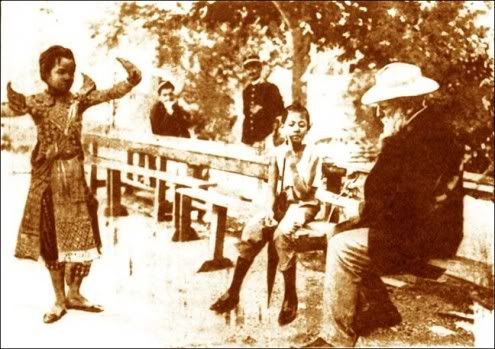
In 1906, a number of Cambodian court dancers of the Royal Ballet of Cambodia inspired the famous French sculptor Rodin so much that he followed the company from Paris to Marseilles in 1906 to sketch them and produced over 150 of his most famous illustrations from their visit as part of King Sisowath's entourage. It's an interesting story with many possibilities to an alternate historian.

Alternate historians working in Southeast Asia will find it significantly challenging but rewarding to recover the names and accounts of figures within the Khmu, Mien, Tai Dam, Lahu, Akha, and other cultures who have primarily oral traditions for preserving their history. This is especially in light of recent discussions over Zomia, which seems well-suited for examination in an alternate history story, especially steampunk.

But who are some of the Southeast Asian historical figures you think might be interesting to examine through an alternate history lens?

Sunday, September 18, 2011

Lao Steampunk: A greenpunk variation?


Or: Steampunk without the steam?

When I think about steampunk, I tend to most often connect it to an aesthetic marked by brass gears and springs, oil and leather, goggles and clanking machinery. It's much broader than that of course.  But that's been the imagery I've noticed most.

Looking at vintage tomorrows and retro-futures, I wonder if Lao steampunk has to deal with industrialization as the ultimate social aim. Or can we explore a vibrant alternative, a sustainable route of technological and social development? Less brass, more bamboo, obviously comes to mind:


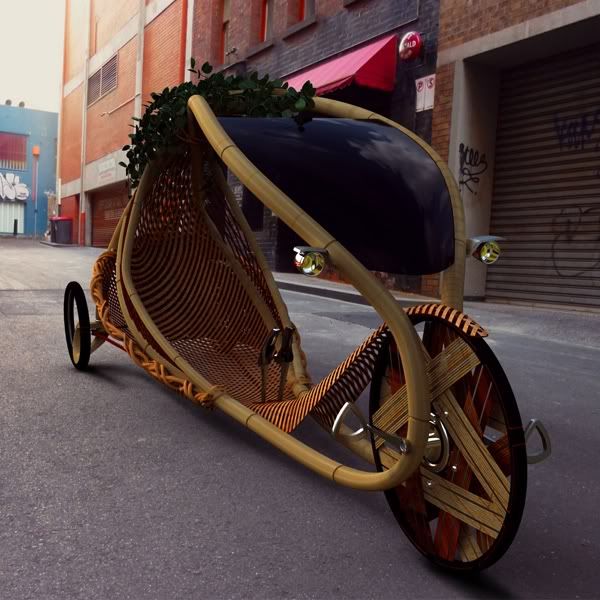
An example of this technology might be similar to iterations of Alexander Vittouris' project to grow a bamboo bicycle through arborsculpture. Using a hard skeletal mold, Vittouris forced the natural growth of bamboo into the form of a bicycle frame. Vittouris' concept is to provide wholly sustainable personal mobility by reassessing our production methods. He asks what would happen if we considered the product lifecycle as a natural growth process. What an intriguing alternative to conventional industrialization that could be explored in Lao steampunk.
When something like this is more time intensive in the manufacture, would it change a Lao society's values? Would they go to greater efforts to avert the destruction of objects grown in such a manner? Or would they consider the objects in their lives more disposable, plucked from the earth like so much ripe fruit?

Unlike bamboo clothing, Vittouris' bamboo bike doesn't rely on heavy processing and chemicals, but turns towards natural properties to make a practical and durable product.  I easily imagine an alternate Lan Xang where such technology is considered consistent with the general cultural values and Buddhist thought. Only a minimum of industrial metalworking and rubber processing would be a part of the society.

In the process of creating a society that would turn to such technology, what would the school and social systems be like that would foster the rise of imaginative and intellectually rigorous thinking? How do you create students who use their wits ethically to better their society and to explore the possibilities of their world?


For Lao, as we face epic levels of deforestation today and watch much of the culture connecting modernity with glass and steel, I think a great deal of interesting ideas could emerge if we explored what it would be like if we had developed societies based on environmentally-sound technologies. 
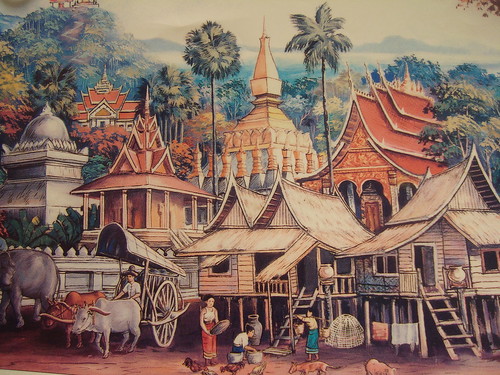
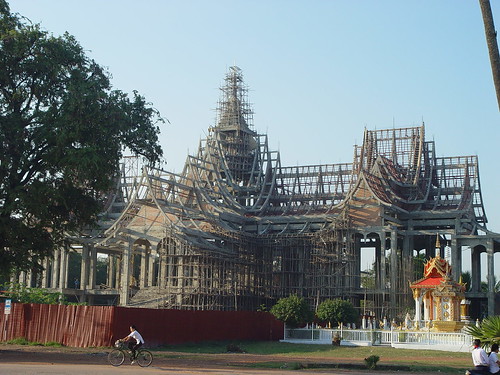
Similar arborsculpture has been done for decades to create chairs, tables, and furniture. Could it be done to make a palace or monastery over time? An interesting notion, although it would certainly be an intensive project spanning several generations:
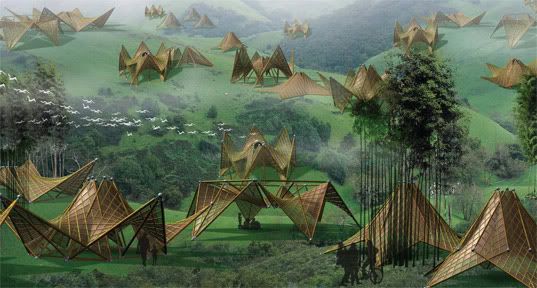
Meanwhile, Ming Tran, for example, came up with a concept for folding houses following a 7.9 magnitude earthquake that killed 69,000 people in central China. His question he faced was: how do you create an easily produced, cheap and environmentally-friendly shelter?

His result are designs that use folding bamboo structures that blend beauty and dynamic, adaptable practicality. Bamboo poles are pre-assembled into rigid geometric shapes. According to Tran, the geometry of the forms gives each structure its integrity, and a range of lightweight modular structures can be quickly assembled in factories and transported to destinations where they're needed. Once the frames are in place, recycled paper covers the frames:


How would such societies respond if they encountered societies such as those currently in vogue among steampunk writers and artists? Brass and Iron vs. Bamboo?

Sunday, October 30, 2011

Lao Steampunk Sundays: Steampunk Haunted House New York

If it weren't for the ridiculous expense of traveling to and around New York, there's an interesting haunted house that uses a steampunk theme for the third year in a row this year. But, to be fair, the tickets run around $20 to $50 depending on when you go (or $10 for students who get lucky.)

Of course, it leads me to wonder what a Lao steampunk haunted house would look like, and back again to our classic discussions of what are the roots of horror to Lao and the most effective storytelling structures to present these concepts to various publics.


"Created by Bessie Award-winning artists of Third Rail Projects, the Steampunk Haunted House is an integration of contemporary installation, dance, and performance art, and is an accessible, fun, utterly breathtaking experience. Unlike traditional haunted houses that rely on gore or graphic violence to horrify their patrons, this event chills, delights, and terrifies its audience without showing a single drop of blood." 

The premise itself is one that should be of interest to many of our Lao american artists, given their current work in speculative literature and art, dance and performance, and should serve as positive encouragement to keep pursuing these visions and to find our own voices within the genre and aesthetic.

Sunday, October 02, 2011

Lao Steampunk Sundays: Bamboo Goggles

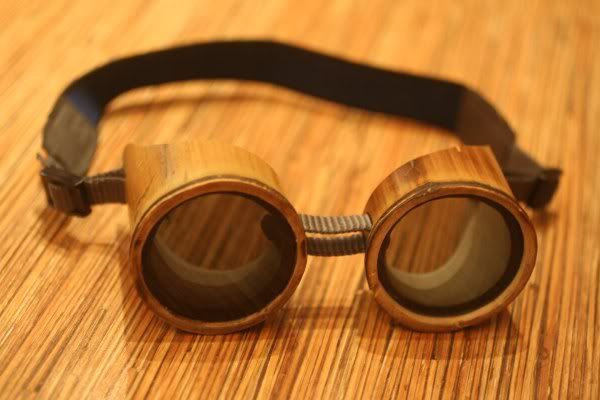
On a lighter note regarding what a world of Lao Steampunk would look like, a Russian designed a set of bamboo goggles that would be similar to what we might see in such a D.I.Y. milieu.

Alas, these are apparently a one-of-a-kind set at the moment, although I certainly hope it will inspire others to start making their own in the years ahead and making them as readily available as steampunk goggles on Etsy and elsewhere on the web.


This isn't to say that bamboo and leather/rubber are the only substances Lao goggles would be constructed from. Given the ornate designs that have been historically employed in Lao formal dress and architecture, it would probably reflect those design sensibilities as well. 

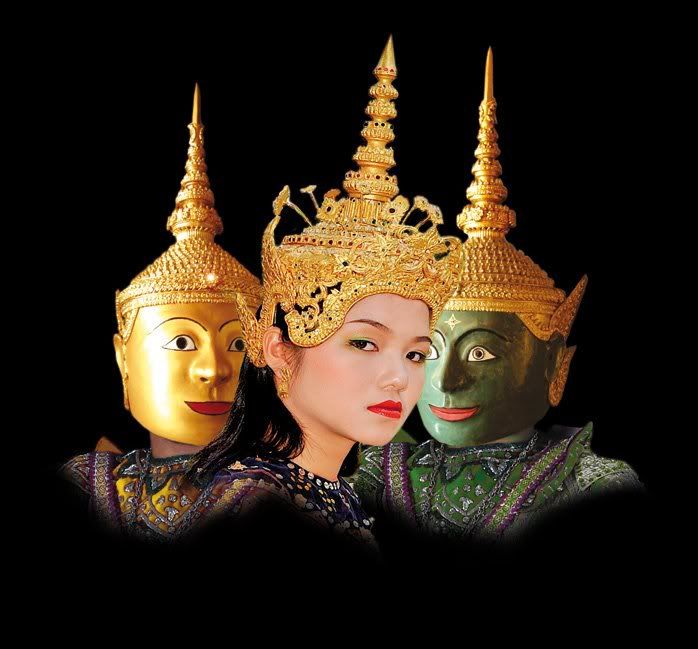
One can only imagine what a steampunk version of the costumes from the Lao epic Phra Lak Phra Lam would look like: 

But what are some of the things you think we would likely see in Lao steampunk attire?