Saturday, July 18, 2015

Tea, Bones, and Roots. A conversation with poet Sandra Lindow


Sandra Lindow is one of those poets of the world who reminds me why I enjoy poetry, and particular;y poets in the speculative tradition. I've known her for well over a decade since meeting her and her husband, the writer Michael Levy at science fiction conventions in Minnesota.

The author of eight books of poetry and many acclaimed publications around the world, she's a frequent nominee for the Rhysling Awards.  She's been living for years in Menominee, Wisconsin and her awards include the Jade Ring for first prize in poetry from the Wisconsin Regional Writers' Association, and the Wisconsin Press Women's Award for Poetry in 2003, and the WFOP 2003 Triad Theme Contest.

I had the pleasure of being interviewed by her during the 2015 CONvergence convention where I was a Guest of Honor, and she was of tremendous assistance in presenting the 2015 Rhysling Awards with me for the Science Fiction Poetry Association. You can visit her online at: http://www.wfop.org/poets/lindowsa.html

Can you tell us a little about yourself, and how did you develop an interest in poetry? What’s it like writing poetry in Wisconsin? 

I have loved poetry since I was a small child. I was lucky to have parents and grandparents who read to me. Soon I had memorized Robert Lewis Stevenson’s Child’s Garden of Verses and most of the early Dr. Seuss Books. My family was active in a rural farming community church, and I loved the music. I began singing in church choirs before I could read. I think I have hymns in the marrow of my bones, the rhythms and rhymes are so deep.

Growing up in the fifties and sixties, I was also fascinated with the space race. In fifth grade I wrote a poem that began, “Many years have come and passed from Pilgrim ships to rocket blast …” and went on to laud American patriotism. My mother’s genealogy went back to Elder Brewster who came over on the May Flower, and my father’s parents were first generation German Americans. The rhythms of dialectical differences fascinated me. (My first book of poetry, Rooted in the Earth, is partially written in my German grandparents’ voices and explores the history of our century farm as well as the rapidly disappearing rural culture.) My first published poem appeared in a Sunday School magazine when I was eleven. I knew early on that I wanted to teach English, so when I was ten, I created a school room in our upstairs where I tried to make other children sit in rows and work in workbooks and was offended when they didn’t think it was fun. During high school, I wrote a collection of poetry about country living, the beauty as well as the long school bus rides. At graduation I was named outstanding English student for my class. I majored in English at University of Wisconsin-Eau Claire and published in its student newspaper and literary magazine as well as a counter cultural mimeographed magazine written in protest of the Viet Nam War.

Although in the sixties, I may have been the only wannabe poet in the unincorporated village of Chili, Wisconsin, Wisconsin has always had a dynamic tradition of poetry. The Wisconsin Fellowship of Poets, now in its 65th year, is the second oldest state poetry organization in the nation. (August Derleth was a charter member.) I joined in the 80s after winning the Meudt Award for Narrative Poetry. I have served as West Central Regional Vice President since 1988. The Fellowship provides a Museletter with markets, sponsors various contests, supports poetry activities in the state as well as the Poet Laureate and publishes a Wisconsin Poets’ Calendar every year. As can be seen in the Calendar, there is much about Wisconsin weather and landscape that makes for poetic inspiration.


Do you prefer coffee or tea? And how do you like it?

I prefer tea and have many different kinds of tea in my house so that I can fit it to my need at the time, caffeinated, decaffeinated, herbal etc. I usually drink it unsweetened or with a little honey. I have concluded that artificial sweeteners and sugar aren’t good for me, and, in any case, foregoing sweetener makes it possible to savor the delicate flavors of the tea. I actually have poems that mention tea drinking. One is called “Tea with Peter’s Mother” and is about the problems of mothering a Peter Pan.


When you introduce someone to your poetry for the first time, which poem do you like to start off with, lately?

This is a difficult question. Certain poems seem to sum up various periods of my life. When I was in my forties, it was a poem called “A Celebration of Bones” and described falling in love with a life-sized x-ray of my own bones that was taped to a chiropractor’s wall. Now in my sixties, my poem “The Hedge Witch’s Upgrade” comes to mind. A hedge witch is a woman who lives at the physical and psychological edge of a village and spiritually connects between civilized and natural worlds. The poem is about gardening and getting a little gardening help from a passing frog.


When are you most satisfied with a poem you’ve written?

I am most satisfied with a poem that is tightly written but still maintains the rhythms of beautiful language. I want my poems to have powerful images and an emotional center that can be conveyed to the reader. Usually my inspiration for writing is something that touches me emotionally. My desire is to explain it without over explaining, to leave meanings open so that they continue to “work” on my readers. I was pleased with this year’s Dwarf Star selection for that reason:
cyborg surgery
birdcage breasts beneath skin
heart a little cuckoo

Who’s been an enduring influence on your poetry over the years?

I went through Robert Frost, T. S. Elliott, and Ezra Pound periods but I have been most influenced by women who wrote about their daily lives such as Emily Dickinson, Wisconsin poet Lorine Niedecker, Sylvia Plath, Adrienne Rich, and Mary Oliver. I have been powerfully moved by women poets like Olga Broumas who use the tropes of the fairy tale to describe what it feels like to grow up in a world that undervalues women. Here is an excerpt from Broumas’s “Cinderella.”
Cinderella 
Apart from my sisters, estranged
from my mother, I am a woman alone
in a house of men
who secretly
call themselves princes, alone
with me usually, under cover of dark. I am the one allowed in
to the royal chambers, whose small foot conveniently
fills the slipper of glass. The woman writer, the lady
umpire, the madam chairman, anyone's wife.
I know what I know.
Other speculative poets that have influenced me include Jane Yolen, Terry Garey, Laurel Winter and Ruth Berman. Part of the pleasure here has included knowing them and reading with them. I wish I could write like Ann Schwader. She writes these perfect little sonnets.


What’s a skill you picked up which was unexpectedly useful in writing your poetry?

I write a lot of poems about gardening, but unexpected skills might be yoga meditation, doing Sudoku and playing Solitaire. Poetry requires mental concentration, the ability to tune out distractions and focus on a mental task, to be “inside” an activity for an extended period of time.


If you could do a poetry reading anywhere in the world, where would you like to perform?

I would like to read a poem on Garrison Keiller’s Prairie Home Companion Radio Show. It would also be wonderful to do a reading outside in summer in a band shell as part of a local Chautauqua event. Farther from home, I am not sure how well my work would translate to other cultures, but I could see myself giving a reading on a boat in the Lake Country of England or on Arthur’s Seat in Edinburgh, Scotland.


What’s an underused mythological creature in modern poetry?

Hmm, I could see potential in Babe the Blue Ox or Coyote, particularly in their female incarnations.


What's your starting advice for anyone thinking of getting into writing poetry seriously?

Don’t quit your day job, dearie. Serious poetry is hard work, but it doesn’t pay for groceries. Read lots of poetry. Join a writers’ group that meets monthly and focuses on rigorous critique and emotional support and encouragement rather than chit chat. If there is nothing available locally, start your own group and coordinate readings at libraries and coffee houses. My experience is that everyone who starts writing seriously can find places to publish.


What's next for you?

Right now I am running for vice president of the SFPA. If elected I plan to revise the constitution and get nonprofit status. I have poems that I would like to publish as books, a series called Arboreal about child raising, and Cinderella’s Breast, a collection of speculative poems about breast cancer. I have started experimenting with writing modern sonnets—fourteen lines of ten syllables. They don’t require the strict rhyme scheme of traditional sonnets.

Someday I’d like to edit an anthology of poems about famous people meeting in heaven. These require a little research and are fun to write. Mine include, “Ronald Reagan and John Lennon Meet in Heaven” “Emily Dickinson and Melville Dewey Wed in Heaven” and “Annette Funicello and the Iron Lady Meet on the Way to Heaven.” It would also be cool to edit an anthology of speculative poems that are redactions of famous main stream poems. Ruth Berman’s take on Marianne Moore’s “Poetry” won second prize in the 2014 Rhysling Contest. I have one “When I Am an Old Physicist I will Wear Ultraviolet” that was published in an anthology of women’s poetry. I bet other poets would have fun with this too.

Thursday, July 16, 2015

CONvergence followup: Legends of Laos


One of the key panels that I was able to present during the recent CONvergence convention in Minnesota was Legends of Laos. The presentation was described as: With over 160 different cultures in Laos, there are many different beliefs that can be difficult to untangle. We'll look at many entities from traditional mythology, including giant carnivorous warrior-sorceresses and lusty super-simian bio-weapons. Roy Booth helped provide many examples of cross-cultural traditions for comparison.


In part, the hope throughout the entirety of my time with my fellow conventioneers was to generate a healthy interest in the various entities attributed to Southeast Asia. I hoped to help them to understand the work that's been done to date, and areas where we still have significant gaps in our knowledge.

This year, we wound up covering a staggering number of entities in a very short period of time and I suspect it was easy to lose track of them all. So, to that end, I want to make sure there's at least one post at this blog that provides a rough recap of what we discussed, and what you might google for further research.


Weretigers were one of the first entities we discussed because it led into a significant number of issues we need to understand when dealing with many of the creatures of Southeast Asia and Laos in particular. While we're all agreed that weretigers are present in Laos, each of the various tribes and cultures there feel the weretigers have different powers and forms. The most common being anything from abandoned babies, bathing beauties, to pious monks or a piece of jewelry. The weretiger condition can be contagious, depending on who you talk to. Shapeshifting is possible in almost all cases. But almost all of the creatures of Southeast Asia shapeshift, so it's entirely possible you never know who you're really dealing with. To complicate matters, there is a forest hermit tradition variously spelled as Leusi, Lersi, Reusi, and so on. These hermits often gain the ability to change shape into beings who have heads like tigers or other fierce creatures. The hermits are relatively friendly to everyday humans. The controversial text, Peoples of the Golden Triangle by Paul and Elaine Lewis is, despite the character flaws of the authors, in many ways a good place to start with a surprising number of footnotes taking beliefs about weretigers and the like into account. I have not yet had the chance to review Patrick Newman's Tracking the Weretiger: Supernatural Man-eaters of India, China, and Southeast Asia, because it did not seem to have much material specifically regarding Laos. However, there may be cross-cultural information worth considering.


Kinnaly were another major subject. These are the half-human, half-birds of Hindu and Buddhist legend, and a key point in this year's conversation was taking note that many entities from these legends change form along the way. In India, the Kinnaly were said to have equine features. We felt it was interesting to note that similar to dragons and large reptilian entities of legend, in Asia, creatures tend to be intelligent, wise, and powerful. But once they get into Europe, they tend to devolve into brutish, savage, and hostile creatures. The carnivorous bird women of Greece, harpies and sirens, for example, would seem almost unrecognizable as relatives to the Kinnaly of Laos, who are considered the embodiment of beauty, grace, music, dance, and the arts. This year's discussion included a recap of the Lao epic, Manola and Sithong, regarding a young Kinnaly princess who was captured by a human hunter and sold to a prince who fell in love with her, despite various court intrigues.

Phi is the general catch-all term for various types of spirits who can be found throughout Laos. We discussed the Phi Phaed (or the Lao term for Preta, hungry spirits, in Buddhist tradition). We discussed a variety of grandmother ghosts including the hungry Phi Kongkoi and Phi Ya Wom, who broke into a million carnivorous pieces who continue to plague humanity today.

We also discussed the Phi Kasu, similar to the Pennangalan of Filipino tradition, an entity that's actually reported throughout Asia. We discussed how some villages put thorns around their windows to prevent the Phi Kasu from coming in, especially since they tend to hunger for the blood and flesh of pregnant women by many accounts. In China, there was once reportedly an entire village of them, and at least one was the consort of a Chinese general, although it freaked the troops out, and they set about dispatching her to the other realms.

We had a conversation regarding the Buddhist hells of Nalok or Naraka, and how during August, the gates of hell are opened for a night for the ghosts to visit their relatives during the Boun Khao Padab Din festival. Many in the Latin American cultures could see parallels to Dia de Los Muertos.


Nyak and their women, known as Nyakinee can be roughly described as gruesome, giant, carnivorous warrior-sorcerer perverts who indulge in all sorts of unsavory practices that humans are forbidden to engage in. Their roots can be found in the classical Rakshasa tradition, and they were the primary antagonists in the Lao version of the Ramayana, known as Phra Lak Phra Lam. It should be noted that many of them took vows to protect the teachings of the Buddha, however, and that they will mete out terrible punishments to those who distort the truths of Buddhist teaching. You can find images of Nyak in many Lao temples around the world.


The primary guardians of the Lao temples, as well as sacred waters and caverns of Laos, and some believe, of all Lao people, are the Nak (not to be confused with their animalistic cousins the Ngeuak) also referred to as the Naga. Female Nak are referred to as Nakini or Nagini. Younger ones are considered Nakanya or Naga Kanya. There will be some variations of spelling. Some accounts identify well over 1,000 different types of Nak. Some have multiple heads, others have very specific powers or domains, etc. Connected to the rainbows, they are said to bridge the mortal realms with the celestial realms. But they will also fiercely defend sacred streams, so while they are somewhat friendly towards humanity, they are also typically best left undisturbed.


The Vanon come from the Hindu tradition of the Vanara, and are the "friendly" warrior monkeys such as Hanuman, the White Monkey general. Lao legends note Hanuman's great courage and ferocity but also tend to remember his habit of trying to romance the mermaids and Nak princesses. The significant thing I have tried to get across is that the Vanon were created by the various deities and demigods of legend to fight against entities such as the Nyak. They weren't all strictly monkeys. Some had features of bears or badgers, tigers, or other wild beasts and imbued with various mystic and superhuman powers such as high strength, speed, and senses. While Lao legend typically presents them as cute, I would strongly argue that you need to consider them laughing bio-weapons.


There were numerous tangents we went on throughout the conversation, as in any good panel. One or two principles that came up was a question of what do we consider paranormal. In Southeast Asia having to confront such moments actually often feels quite normal. The research of S. Suwanlert has some fascinating questions about the realities of entities such as the Phi Pob and how you deal with them, for example. In Southeast Asia, it differs from the US and Europe in that dispelling or exorcising the ghosts and the supernatural isn't really the priority, typically, as much as finding a way to live in harmony with them, especially ancestral or guardian spirits, or to determine to avoid them.

As you can see, this is a LOT of material we were covering and there were many more things we could discuss, but I hope this helps those of you who were in attendance, or who wanted to come but couldn't, to get a better sense of some of the things to research or look for in the future. But what are some of your questions?

Wednesday, July 15, 2015

Full Steam Ahead: Catching up with J. Damask

A while back, we did an interview with author J. Damask aka Joyce Chng, for Asian American Press and I've kept in regular touch with her since because of her insight and perspective on science fiction and fantasy in Singapore and Asia, particularly from a Steampunk perspective. 

Her writing is always lively and intriguing and she's finishing up the final stages of getting the Southeast Asian steampunk anthology The SEA is Ours out with her co-editor, Jaymee Goh of Silver Goggles fame. The SEA is Ours will be coming out this Fall from Rosarium Publishing. I had a chance to catch up with her recently about her other upcoming projects and other ideas that have been on her mind lately!

You always have so many projects going on at once. What are your top  three at the moment you're really excited about?

Aww, thank you.
1. The SEA is Ours
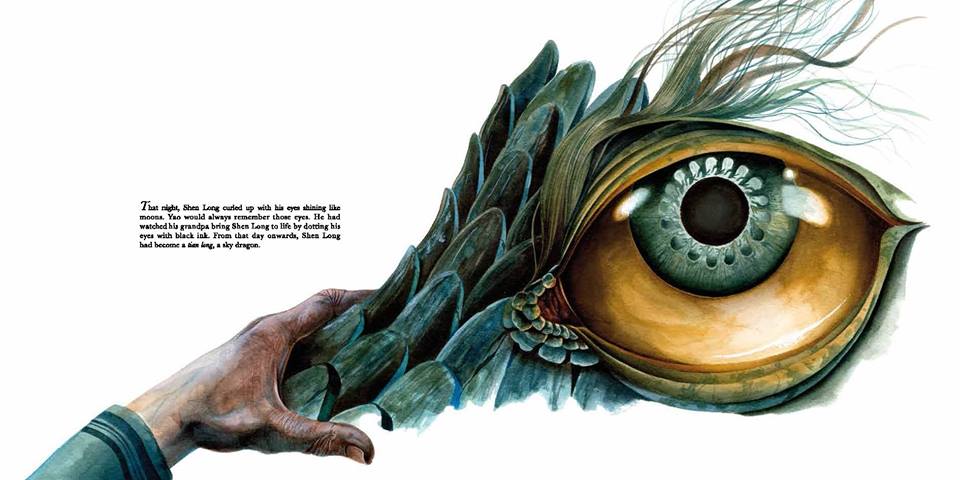
2. Dragon Dancer (a picturebook about a boy and a dragon)
3. Something I have been working – shhh, it’s a secret...


What are some of the things you've learned while editing "The SEA Is Ours?"

That working with a like-minded and passionate co-editor (Jaymee!) is awesome. That we really have talented people from Southeast Asia.  That bringing together this group of talented people is a journey of its own.


"The SEA Is Ours" is a really ambitious project! How did you get  involved in the first place, and what are some of your hopes for it  once it's released?

Jaymee and I have been talking for a long time about a publication by Southeast Asians for Southeast Asians. We tossed around ideas – and finally, we had a brainflash to start something on Southeast Asian steampunk. We both love steampunk and would want to see stuff from Southeast Asian writers.


In your novels, you're often working with some interesting themes of  family and transformation. What are some of the directions you're  thinking of taking for your characters next?

I am still in the middle of planning. I am not sure if I want to write more in the Jan Xu Adventures world (including Gabriel Sutherland’s story – I still need to go back to his story and write more. Now if I have more time!)

Likewise for my werewolves-in-space space opera: there is a sequel, but I have to work on it. Definitely issues that the main characters have to face, carpets being pulled under their feet etc etc.


As a writer, what are some of the current concerns you have about the 
way we're discussing diversity in world literature?

Oh, yes, that.

As a writer, I feel that the diversity push in the States is different than the concerns faced by writers of different non-US countries. For example, Southeast Asia is already diverse and the key issue is visibility (at least, in places like the States and the United Kingdom). At the same time, market needs (let’s be serious, publishing) are also different. So, the key thing is to have the markets meet (or least, agree on common grounds)

World literature is diverse and in order to walk the talk, we need to include things like translators and translations, because many of the diverse works are not in English and not all writers are Anglophones. Indeed, even for SFF writers writing in English, they have their first languages or mother tongues


What's your advice for a beginner who is interested in getting  involved with writing?

Write. Write even more Do not give up Find like-minded friends and mentors who will inspire you.


What are some of the things you think are overused in Steampunk  literature? Where are there areas where you feel we can go next after  "The SEA Is Ours"?

Gears. Steam. Gears

The worlds we see in The SEA Is Ours open up endless possibilities. We have skywhales. We have trains. We have volcanoes. We have people from parts of Southeast Asia doing funky and creative things!

I would like writers to look at their landscapes. In Southeast Asia, we have the Ring of Fire. We do not have seasons like the Northern Hemisphere. Instead we have monsoons, typhoons and hurricanes. Even the energy resources are not just steam-related, but solar, wind, thermal etc!


Who are some of the voices in Steampunk that are really exciting you today?

Jaymee GohSuna Dasi and Dru Pagliassotti.


Who do you consider some of your biggest role models as a writer?

Kari Sperring, Judith Tarr, Han May and BingXin.


Travel often figures heavily in Steampunk literature. If you could travel anywhere in the world like "Around the World in 80 Days," today, what would be some personal 'Must-Sees' for you?

Petra, Jordan, The Hagia Sophia in Istanbul, Turkey. Egypt, especially Cairo. Russia. The Grand Canyon in the United States. My ancestral home in Fujian, China.

Christopher Jones and the 2015 CONvergence Guest of Honor Badges


One of the outstanding perks of being a CONvergence Guest of Honor is that you get a wonderful one-of-a-kind Guest of Honor badge illustrated by Christopher Jones, who has been the artist for an amazing number of titles over the years for Marvel and DC comics, among others. He's done work for the Batman '66 series, Worlds of H.P. Lovecraft, Kolchak, Black Scorpion, Re-Animator, Young Justice, and Pirates of the Carribean. He recently posted his guide to the Guest of Honor badges he did for all of us this year and the ideas that went into each badge, including mine.

Here, we have the CONvergence mascot Connie as a classic Nagakanya or Nagini from the Hindu/Buddhist mythology that's common to Laos and Southeast Asia. As I've discussed in many places elsewhere, these are the daughters of the Naga Kings who are often closely connected to wisdom and knowledge at a profound, cosmic level.  In Laos the term would be Nakini or Nakanya. I think Chris did an excellent interpretation with short notice.

He's going to be the Guest of Honor at next year's CONvergence, so that's going to be interesting to see how he does a self-portrait. In the meantime you can also follow him on Twitter at: @ChrisJonesArt